India’s EV charging landscape has changed dramatically over the last few years. What began as a handful of pilot chargers in metro cities has evolved into a nationwide, app-driven public charging network spanning highways, tier-2 and tier-3 towns, office parks, and residential hubs.
By mid-2025, public charging infrastructure in India crossed key scale thresholds. Oil marketing companies expanded chargers across fuel stations, private charge point operators rolled out fast-charging corridors, and utilities deepened their presence in cities and fleets. For EV owners, this growth brought more choice—but also more complexity.
Today, finding and using a charger is no longer just about location. It depends on:
- Whether the charger supports your vehicle and power needs
- How reliable the real-time status information is
- How smooth the payment and session flow feels
- Whether the app helps you plan, not just plug in
In this environment, EV charging network apps have become the real gateways to public charging. They shape how confidently an EV owner can travel, commute, or operate a fleet.
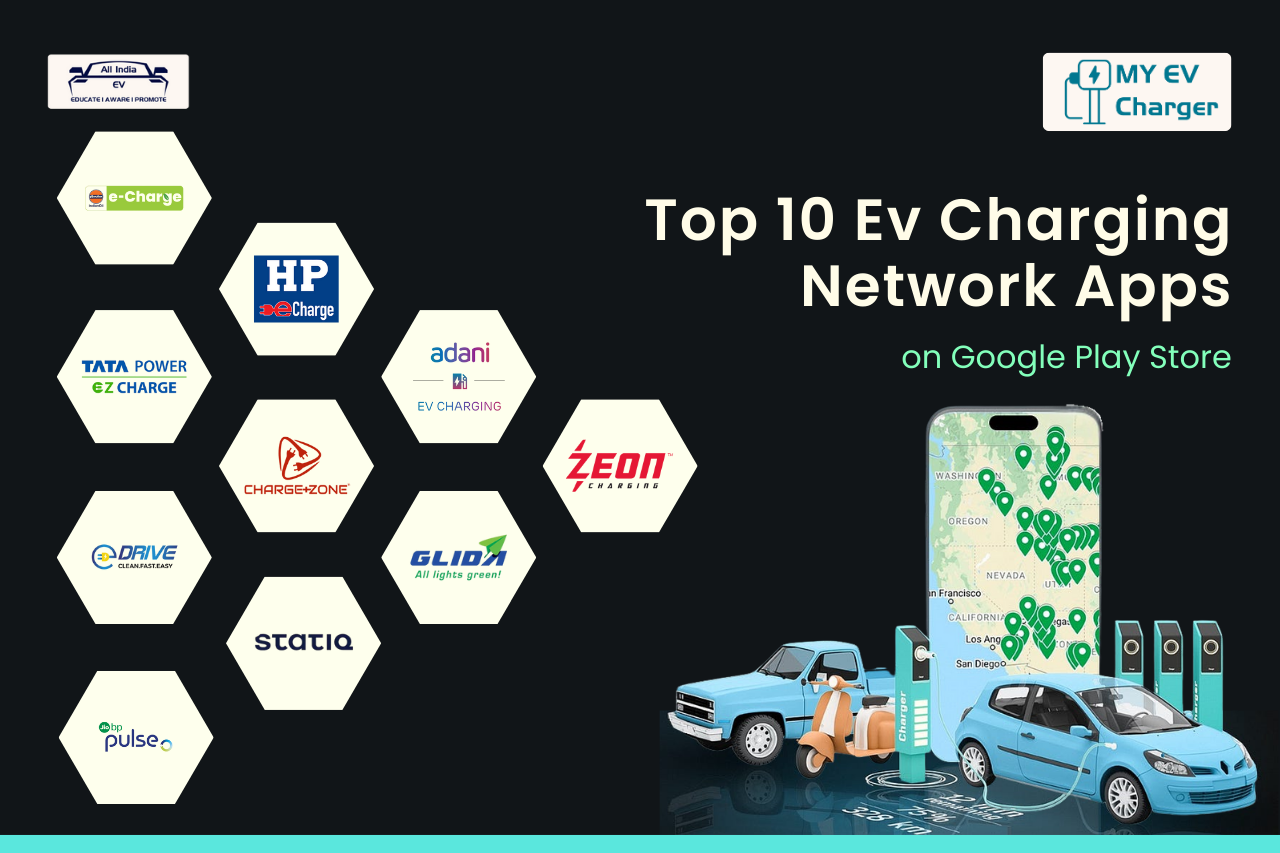
This article reviews 10 of the most influential EV charging network apps powering India’s public chargers in 2025, covering their network scale, technical profile, and real-world use cases. The goal is simple: help EV users understand which apps work best for different driving and charging needs.

Table of Contents
- IndianOil e-Charge (IOCL)
- Tata Power EZ Charge
- BPCL eDrive
- Jio-bp pulse
- HP eCharge (HPCL)
- CHARGE ZONE®
- Statiq
- Adani TotalEnergies E-Mobility
- GLIDA
- Zeon Charging
- Snapshot: Approximate Network Sizes (Late 2025)
- How These Apps Fit Into the Bigger EV Ecosystem
For each, we cover:
- Network size & scale (as of late 2025, based on publicly available data)
- Technical characteristics (charger types, power levels, backend architecture)
- Practical use-case: which type of EV user benefits the most
1. IndianOil e-Charge (IOCL)
IndianOil has emerged as one of India’s largest EV charging infrastructure players:
- Over 14,000 EV charging stations integrated in its network, plus around 100+ battery swapping stations.
- Within the national public charging database, IOCL accounts for roughly 7,900+ public charging stations.
This makes IndianOil e-Charge one of the largest charging networks in India by station count.
Charger types and technical profile
- AC chargers:
- Predominantly Type-2 AC chargers in the 7.4–22 kW range for city and destination charging.
- DC fast chargers:
- CCS2 and Bharat DC-001 in the 30–60 kW range at many highway locations.
- Backend:
- Typically OCPP-compliant chargers, centrally managed for real-time monitoring, fault diagnostics, firmware updates, and utilization analytics.
App experience
The IndianOil e-Charge app functions as a multi-operator smart charging platform:
- Map view of nearby chargers, especially at IOCL fuel stations
- Filters by connector type and power rating
- Start/stop control via the app and integrated digital payments
- Strong footprint in highways and tier-2 / tier-3 cities, thanks to dense IOCL retail outlet coverage
Best suited for:
Highway travellers, intercity fleets, and EV owners who prefer the familiarity and safety of fuel station locations.
2. Tata Power EZ Charge
Tata Power operates one of the most comprehensive EV charging ecosystems in India:
- 5,500+ public and captive charging points
- Over 140,000 home chargers installed
- More than 1,200 bus charging points
- Presence in over 630 cities and towns
This makes Tata Power EZ Charge a key player across home, public, fleet, and bus segments.
Charger types and technical profile
- AC charging:
- 7.4 kW, 11 kW, and 22 kW Type-2 chargers for homes, offices, and public locations.
- DC fast charging:
- 30–60 kW CCS2 chargers at many public sites, and higher-power systems at select highway and fleet hubs.
- Backend architecture:
- OCPP-based platform enabling remote diagnostics, session logging (voltage, current, kWh, fault codes), and smart load management, especially at bus depots and large fleet yards.
App experience
The EZ Charge app provides:
- Discovery of nearby chargers using city, pin code, or “near me”
- Filters for AC/DC, power rating, and connector type
- Real-time session tracking (kWh consumed, time elapsed, cost)
- Integrated payments via wallet, UPI, and cards, plus access to charging history and invoices
Best suited for:
Tata EV owners, corporate fleets, and city-based EV users who want a reliable, utility-backed charging network with wide coverage.
3. BPCL eDrive
Bharat Petroleum is a key player in highway charging:
- Within the national public charging station records, BPCL accounts for roughly 3,100+ public charging stations (as of mid-to-late 2025).
- Many of these chargers are situated along major national and state highways, making BPCL a key contributor to corridor electrification.
Charger types and technical profile
- Fast-charging corridors:
- Predominantly CCS2 DC fast chargers, often in the 30–60 kW category, configured to provide around 100–150 km of range in 25–30 minutes for typical passenger EVs.
- Urban and semi-urban outlets:
- Type-2 AC chargers in the 7.4–22 kW range at select locations.
App experience
The BPCL eDrive app typically offers:
- Map-based discovery of BPCL chargers along a planned route
- Connector and power filters
- Real-time charger status (where supported) and tariff visibility
- App-based session control and digital payment options
Best suited for:
Interstate travellers, logistics fleets, and ride-hailing operators who frequently stop at BPCL fuel outlets and expect dependable, highway-oriented fast charging.
4. Jio-bp pulse
Jio-bp has grown aggressively in the EV charging space:
- By 2024–25, the Jio-bp pulse network had crossed roughly 5,000 charging points across about 500 locations, with an estimated 95% of these being DC fast chargers.
- The network spans fuel stations, malls, corporate parks, and premium urban locations.
Charger types and technical profile
- Strong emphasis on DC fast charging:
- Power levels commonly in the 60–150 kW range for passenger vehicles, with some hubs using higher multi-gun systems for simultaneous fast charging.
- Chargers are tightly integrated into a digital backend for:
- Real-time performance monitoring
- User authentication
- Session tracking and automated billing
App experience
The Jio-bp pulse app offers:
- Route-based and nearby station discovery
- Real-time session information (state of charge, kWh consumed, cost estimation)
- Start/stop control and integrated digital payments
- A user experience aligned with Jio’s broader digital ecosystem
Best suited for:
Urban and highway users who prioritise fast charging, premium locations, and a highly digital, app-first experience.
5. HP eCharge (HPCL)
Hindustan Petroleum adds another strong layer to India’s public charging backbone:
- HPCL operates roughly 2,300 public charging stations as per public datasets from 2025.
- These chargers are widely distributed across HPCL retail outlets, especially along important corridors and inside major cities.
Charger types and technical profile
- AC chargers:
- Type-2 AC chargers (around 7.4–22 kW) at select city and destination locations.
- DC fast chargers:
- CCS2 fast chargers on strategic highway corridors, generally operating in the 30–60 kW range.
App experience
The HP eCharge app focuses on simplicity and predictability:
- Fuel-station-based charger discovery
- Standard filters and basic real-time status where enabled
- Start/stop and payment through the app
The key advantage is the 24×7 access and amenity support of fuel station infrastructure.
Best suited for:
EV owners who value familiar, well-lit locations with basic amenities like toilets and food options, while transitioning from ICE refuelling habits to EV charging.
6. CHARGE ZONE®
CHARGE ZONE is one of India’s largest private CPOs and a clear heavyweight in fast-charging:
- By April 2025, CHARGE ZONE had deployed 13,500+ charging points across India and some international locations.
- The network covers metro cities, tier-2 and tier-3 towns, and key intercity highways.
Charger types and technical profile
- DC fast charging focus:
- 30–60 kW fast chargers for cars
- 60–360 kW high-power systems for e-buses and heavy commercial EVs
- AC charging:
- 3.3–10 kW AC chargers for offices, residential complexes, and slow/destination charging.
- Backend architecture:
- OCPP-compliant chargers connected to a cloud-based platform for load management, performance monitoring, and analytics.
- Strong integration into OEM partnerships and high-speed corridors.
App experience
The CHARGE ZONE app provides:
- Real-time map with charger locations, power ratings, and connector details
- Session control and secure digital payments
- Route planning for highway travel, with visibility into fast chargers along key routes
Best suited for:
Long-distance EV drivers, premium EV owners, and commercial fleets seeking reliable, high-power fast-charging across major corridors.
7. Statiq
Statiq has positioned itself as a highly visible consumer-facing charging platform:
- More than 7,000 charging stations mapped across 60+ cities in India.
- The number includes a mix of Statiq-owned chargers and partner/roaming chargers integrated into the app.
Charger types and technical profile
- AC charging:
- Type-2 AC chargers in the 7.4–22 kW range across offices, societies, and public parking spaces.
- DC charging:
- CCS2 DC fast chargers at key locations in major cities and along certain corridors.
- Partnerships:
- Collaborations with OEMs, real-estate partners, and hotels are expanding its footprint, including large planned deployments in the hospitality sector.
App experience
The Statiq app is built with a strong consumer UX focus:
- Clean onboarding and registration flow
- City-wise charger listings and route-based search
- Filters for AC/DC, power rating, and connector type
- Wallet, UPI, and card-based payments, plus session history
Best suited for:
Urban EV owners, especially in regions like NCR, Maharashtra, and Karnataka, who need dense city coverage and a modern app experience.
8. Adani TotalEnergies E-Mobility
Adani has been scaling up EV charging through its energy and gas businesses:
- Within roughly the first 18 months of operations, the group installed around 3,400 EV charging points.
- By late 2025, the broader ecosystem had crossed approximately 4,200+ EV charging points across 27 states and over 220 cities.
Charger types and technical profile
- Mix of AC and DC chargers, with a clear focus on:
- High-power DC fast chargers at fleet hubs
- CCS2 fast chargers at OEM dealerships (for example, MG Motor)
- Large “superhubs” for fleets, where a single location can support dozens or even hundreds of charging points.
App/platform experience
The Adani EV charging platform and app typically offer:
- Discovery and navigation to hubs and public chargers
- Real-time availability tracking (especially relevant for fleets)
- Payment management and session logging
Best suited for:
Fleet operators, cab aggregators, and urban EV users in cities where Adani has deployed multi-bay charging hubs and integrated mobility stations.
9. GLIDA (formerly Fortum Charge & Drive)
GLIDA has built a strong presence as a premium DC fast-charging operator:
- Over 980 public charging points across 17 states, 38 cities, and 16 national highways.
- A growing user base with tens of thousands of registered app users.
Charger types and technical profile
- High-power DC chargers:
- Sites with ultra-fast chargers up to 200 kW paired with satellite dispensers.
- Multiple 30–60 kW CCS2 fast chargers at many locations.
- AC chargers:
- Type-2 AC chargers in the 7.4–22 kW range at select destinations.
- Designed to serve premium passenger EVs and high-utilisation commercial use cases, sometimes allowing 100+ vehicles to charge simultaneously across a hub.
App experience
The GLIDA app is optimised for highway and premium urban use:
- Route-based planning with highway focus
- Clear display of power levels and connector types at each site
- Real-time charger status and payments
Best suited for:
Premium EV owners and long-distance travellers who require high-power, reliable fast-charging on intercity corridors.
10. Zeon Charging
Zeon is a pure-play CPO with strong focus on South India:
- 500+ charge points operational across 300+ locations.
- More than 15,000 km of highways electrified with Zeon chargers across Tamil Nadu, Karnataka, Kerala, and neighbouring states.
Charger types and technical profile
- Highway and destination charging focus:
- CCS2 DC fast chargers, typically in the 30–60 kW range at highway locations.
- Type-2 AC chargers at hotels, resorts, and restaurants for overnight and destination charging.
- App and RFID-based access for users, with clear tariff structures.
App experience
The Zeon app provides:
- Simple interface to select site, plug in, and start sessions
- Real-time availability, pricing, and session data
- Strong appeal among EV users who frequently travel by road across South India
Best suited for:
South Indian EV owners and road-trippers who rely on predictable and well-maintained charging along holiday and business routes.
Choosing the Right App in a Growing EV Market
India’s public EV charging ecosystem is no longer defined by a single dominant network. Instead, it is a layered mix of oil companies, utilities, private charge point operators, fleet-focused hubs, and city-centric charging platforms—each serving a slightly different need.
For EV owners, this means there is no single “best” app. The right choice depends on how and where you drive:
- Highway users may prioritise fast-charging corridors and fuel-station locations
- City commuters may value dense AC coverage and a clean app experience
- Fleet operators need uptime, load management, and predictable performance
- Premium EV owners often look for high-power DC chargers and reliable route planning
What ties all of this together is the app layer. A charger on the ground only becomes useful when the app makes it discoverable, reliable, and easy to pay for.
At My EV Charger, a brand of All India EV, we closely track how charging networks, technologies, and user experiences evolve across the country. As infrastructure scales and standards mature, informed choices—about hardware, software, and networks—will play a key role in making EV adoption truly seamless.
The Indian EV charging story is no longer about availability alone. It is about usability, reliability, and trust—and the apps reviewed here are at the center of that transition.