Finding electric car charging stations near me or an electric car charger near me can make or break your EV driving experience. Whether you’re searching at 2 AM or planning your weekly charging routine, understanding your options is crucial for seamless electric vehicle ownership. This guide helps you choose the best charging location home, office, or public based on convenience, cost, and your driving patterns.
Understanding Your Three Main Charging Options
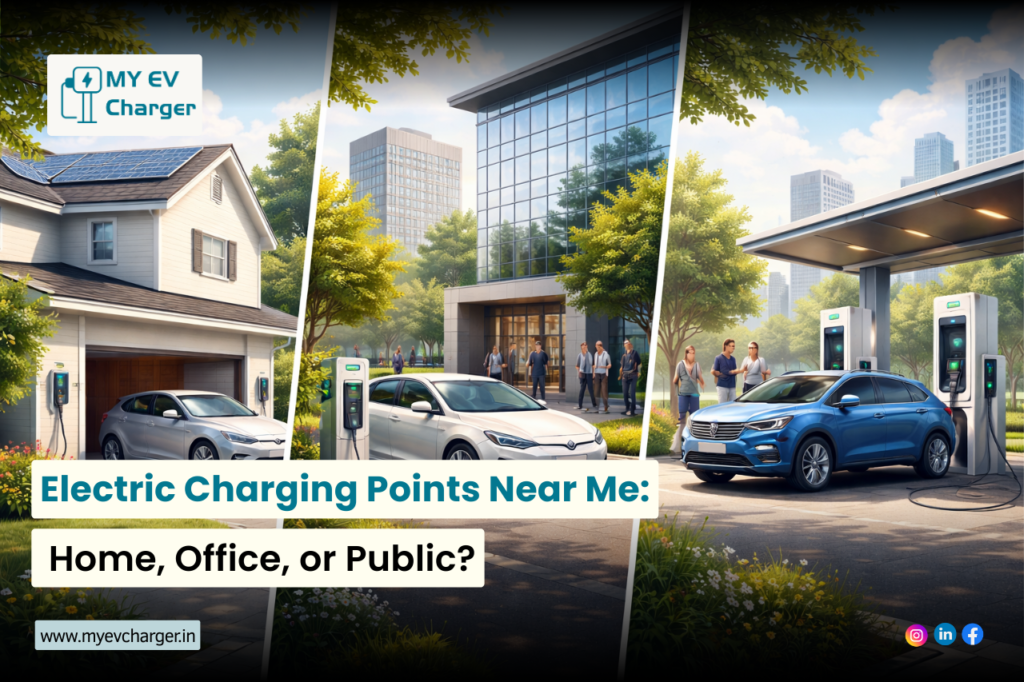
When you search for electric charging points near me, you’ll discover three distinct categories: home chargers, workplace charging stations, and public charging networks. Each serves a unique purpose in the EV ecosystem, and most successful EV owners use a strategic combination of all three to maximize convenience while minimizing costs.
Home Charging: Your Primary Power Source
For most EV owners, home charging becomes the backbone of their charging routine. Installing a charger transforms your garage or driveway into a personal fueling station, offering unmatched convenience and long-term savings.
The Key Advantages
Home charging, typically using Level 1 or Level 2 units, offers the ultimate convenience for overnight charging. You’ll wake up every morning to a fully charged vehicle, eliminating trips to charging stations for your daily commute. Level 2 home chargers add 20-60 miles of range per hour, making them ideal for daily routines since you can “refuel” while sleeping.
The cost per kilowatt-hour at home is significantly lower than public charging rates typically around 3-5 cents per kWh translating to substantial savings over time. You also control your charging schedule, taking advantage of off-peak electricity rates if your utility offers time-of-use pricing.
Installation Considerations
Installation costs range from $500-$2,000 depending on your electrical setup and local labor rates. Most homes require a dedicated 240-volt circuit, similar to what powers your clothes dryer. Before installing, assess your electrical panel capacity and parking situation. The good news? Many utilities and governments offer rebates that can offset these initial expenses, making home charging the cheapest long-term option.
Drawbacks include upfront setup costs and slower speeds compared to public fast chargers, but for daily driving, home charging provides unbeatable value.
Renters shouldn’t feel excluded. Some landlords are increasingly open to installing charging equipment, especially when tenants offer to cover costs. Portable Level 1 chargers that plug into standard outlets provide a slower but viable alternative.
Office Charging: The Overlooked Opportunity
Searching for an electric car charger near me might reveal that your workplace already offers charging stations. Workplace charging represents an underutilized resource that can dramatically reduce your charging costs and range anxiety.
Why Workplace Charging Matters
Workplace stations suit commuters who park for 8+ hours, often providing free Level 2 charging as an employee perk. Your car sits idle during your workday, making this the perfect opportunity to replenish your battery without extra trips. Many employers offer this as a sustainability benefit, effectively giving you free “fuel” for your commute.
Even slow Level 2 chargers can add 20-40 miles of range during a typical workday often enough to cover your round-trip commute. They boost range without extra trips, perfect if electric charging points near me align with your job location.
Making It Happen
Check with your employer availability varies, and peak hours might limit spots. If your workplace doesn’t currently offer charging, present the business case to your facilities or HR team, highlighting employee satisfaction, sustainability goals, and potential tax incentives for businesses that install EV infrastructure.
In major cities like Delhi, many offices feature CCS-II compatible units from providers like Tata Power, making workplace charging increasingly accessible.
Public Charging: Your Extended Range Safety Net
Public charging networks fill the gaps when home and workplace charging aren’t enough. When you search electric car charging stations near me, you’re tapping into a rapidly expanding network.
Types of Public Chargers
Level 2 public chargers are commonly found at shopping centers, restaurants, and municipal parking lots. They add 10-20 miles of range per hour, making them ideal for top-ups during errands or dining.
DC fast chargers (Level 3) represent the highway travel solution, delivering up to 100+ miles in just 30 minutes. These stations cluster along major routes and near highway exits, enabling long-distance EV travel. They’re great for road trips but cost more typically 10-50 cents per kWh and may involve wait times during peak hours.
Finding Public Stations
In major cities, public charging infrastructure is expanding rapidly. In New Delhi alone, over 1,757 charging spots exist, many operating 24/7 with CCS-II support from providers like Tata Power, Bolt.Earth, and IOCL stations.
Apps like PlugShare, ChargePoint, ChargeFinder, and built-in vehicle systems show real-time availability and pricing, helping you locate the nearest options. Most networks require membership or a smartphone app for payment, though some offer contactless credit card payments.
Comparison: Home vs. Office vs. Public Charging
| Aspect | Home | Office | Public |
| Speed | Slow-Medium (Level 1/2) | Medium (Level 2) | Fast (DC Level 3) |
| Cost | Lowest (~3-5¢/kWh) | Often free | Higher (~10-50¢/kWh) |
| Convenience | Daily top-up | Workday charging | On-the-go |
| Availability | Always (post-install) | Job-dependent | Widespread in cities |
| Best For | Daily commuting | Regular office workers | Road trips, urgent needs |
Building Your Personal Charging Strategy
The optimal charging approach depends on your unique circumstances and driving patterns.
For Daily Commuters
Prioritize home charging if you drive under 100 miles daily for maximum cost savings. If your daily commute is 40 miles round-trip and you have home charging, an overnight session will fully meet your needs. Add a 20% buffer for unexpected detours or errands.
For Urban Apartment Dwellers
Without home charging, rely heavily on workplace charging supplemented by public stations for weekend needs. Identify 2-3 reliable stations near your regular locations to avoid range anxiety.
For Frequent Travelers
Invest in home charging for daily use while budgeting for regular DC fast charging sessions during road trips or business travel. Use apps to map out charging stops along your routes.
Important Considerations
Factor in your EV model’s connector type CCS-II is common in India, while other regions may use different standards. Location matters significantly; Delhi users have ample Tata Power spots and over 1,757 public stations accessible via apps, while rural areas may have limited options.
Start with a home setup for reliability, then supplement with workplace charging if available, and use nearby public options for extended trips or urgent top-ups.
The Future of EV Charging
The charging landscape continues evolving rapidly. Charging speeds are increasing, with next-generation fast chargers promising 200+ miles of range in under 15 minutes. Networks are expanding coverage into rural areas and underserved communities. Apartment complexes and condominiums are retrofitting parking structures with shared charging infrastructure, making EV ownership more accessible than ever.
Making Your Final Decision
Choosing between home, office, and public charging isn’t binary it’s about building a flexible ecosystem. Home charging should be your first priority if feasible, offering unmatched convenience and the lowest cost at approximately 3-5 cents per kWh. Workplace charging serves as an excellent supplement, particularly for drivers with longer commutes or those wanting to minimize home electricity use. Public charging fills the gaps for trips beyond your typical range and provides peace of mind knowing options exist everywhere you travel.
When you next search for electric charging points near me, evaluate each option strategically based on your daily driving distance, parking situation, workplace amenities, and budget. The right charging solution isn’t about finding a single perfect answer but rather creating a charging routine that supports your lifestyle while optimizing costs.
With thoughtful planning and the right combination of home, office, and public charging options, you’ll discover that keeping your EV charged is simpler, more convenient, and more economical than you might have imagined. The electric future is here and it’s fully charged.