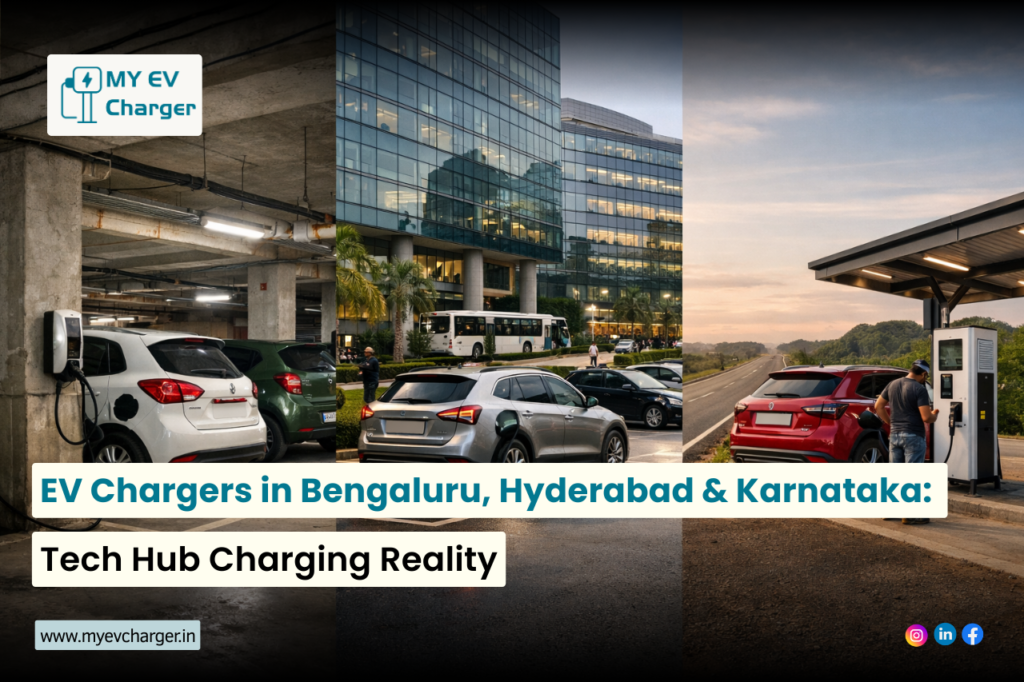
India’s technology corridors are driving the electric vehicle revolution, yet the charging infrastructure narrative is more complex than the hype suggests. While ev chargers in Bengaluru lead the nation with impressive numbers, significant gaps persist across apartments, tech parks, and highways in Karnataka and neighboring states. Understanding this ground reality is crucial for anyone considering the EV transition in India’s tech hubs.
Bengaluru’s Urban Charging Dominance
Bengaluru stands as India’s undisputed EV charging leader, boasting over 2,900 public charging points across the city. This makes it the most EV-ready metro in the country, surpassing even the extensive networks of ev chargers in Delhi and ev charging stations in Mumbai.
The scale of infrastructure is remarkable. Charge Zone’s massive 210-point charging station in Beguru serves as a blueprint for fleet and daily commuter needs, representing one of the largest single charging hubs in India. These installations demonstrate how ev chargers in Karnataka are being deployed at an unprecedented scale to meet growing demand.
Tech Park Integration: The Workplace Advantage
Bengaluru’s tech parks have emerged as critical charging ecosystems. Major campuses like Manyata Tech Park, Embassy Tech Village, and Electronic City integrate Level 2 AC chargers delivering 10-60 miles of range per hour, perfectly suited for workday top-ups. Employees can arrive with partial charge and leave with a full battery, eliminating range anxiety from daily routines.
This workplace charging advantage sets Bengaluru apart. With over 80% of the city’s charging infrastructure utilizing an AC/DC mix optimized for different use cases, tech professionals enjoy seamless access to power throughout their day. The model is now being replicated in other cities, with ev charging stations in Mumbai increasingly adopting similar office-based networks.
Hyderabad’s Strategic Network Growth
EV chargers in Hyderabad are strategically concentrated around the city’s IT corridor, with HITEC City and Gachibowli tech zones forming the core of the network. The city has deployed 64+ highway-linked charging points, particularly along the Bengaluru corridor, enabling seamless inter-city travel between two of South India’s largest metros.
Hyderabad’s approach differs from Bengaluru’s organic growth. TSREDCO (Telangana State Renewable Energy Development Corporation) incentives actively subsidize home installations, accelerating residential charging adoption. The state’s ambitious 2025 EV policy targets are driving operators like ElectricPE to expand aggressively, focusing on 24/7 access points that address one of the key pain points in India’s charging infrastructure.
Highway Connectivity
The NH-44 corridor connecting Hyderabad to Bengaluru exemplifies successful highway charging deployment. Fast DC chargers with 60-120kW capacity are positioned at 50-kilometer intervals, making the 570-kilometer journey practical for most EVs. Key charging locations at Chitradurga, Anantapur, and multiple fuel pump-integrated stations ensure redundancy and reliability for long-distance travelers.
Karnataka’s Statewide Leadership
Karnataka has established itself as India’s EV infrastructure pioneer with over 5,700 public chargers statewide, the highest concentration in any Indian state. While 85% remain concentrated in urban areas, the state is systematically closing highway gaps to enable true intercity mobility.
The numbers tell an impressive story: 149 charging stations in the greater Bengaluru area, with well-developed routes to Pune (109 chargers along the corridor), Mysuru (33 stations), and Hyderabad. Key corridors like Tumakuru Road and the Bengaluru-Mysuru Expressway maintain fast chargers every 50 kilometers, backed by NHAI infrastructure and MSRDC toll exemptions for EVs.
Grid Infrastructure Supporting Scale
Unlike some states struggling with power supply, Karnataka has invested in grid upgrades to support large-scale EV charging. This infrastructure backbone enables the deployment of high-capacity charging hubs without overwhelming local power systems. The result is a network capable of handling 1.4 lakh daily vehicles across major highways, gradually transforming tech hub routes into carbon-neutral corridors.
The Apartment Charging Challenge
Despite urban charging growth, apartment dwellers represent 60% of EV-related queries but face the most significant infrastructure barriers. In densely populated cities like Bengaluru and Hyderabad, where high-rise living dominates, this represents a critical adoption bottleneck.
Regulatory and Technical Hurdles
Shared power infrastructure and society approval processes slow residential installations considerably. Many older apartment complexes lack the electrical capacity for multiple EV chargers, while resident welfare associations navigate complex approval procedures and cost-sharing arrangements.
BBMP (Bruhat Bengaluru Mahanagara Palike) now mandates that new complexes allocate 5-10% of parking spaces for EV charging, but this doesn’t address the millions living in existing buildings. Retrofitting requires navigating BESCOM (Bengaluru Electricity Supply Company) procedures and securing society consensus on installation and billing.
Practical Solutions Emerging
Modular solutions are gaining traction. 7kW wallbox chargers optimized for overnight charging can be installed with minimal electrical work, while BESCOM and TSREDCO offer rebates up to ₹50,000 to offset installation costs. These subsidies make the initial investment more palatable for individual owners and housing societies.
Tech parks are partnering with operators like Charge Zone to provide reserved charging bays for employees living in apartments without home charging. This combination of workplace and public charging creates a viable ecosystem even when residential infrastructure lags.
Highway Infrastructure: Enabling Long-Distance Travel
Highway charging addresses range anxiety for intercity journeys. Karnataka’s focus on plug-and-go DC fast chargers every 50 kilometers represents a fundamental shift in EV viability for non-urban driving.
The state’s 236 charging stations across South India highways ensure that major routes are well-covered. The Bengaluru-Mysuru Expressway demonstrates best practices with strategic placement at Ramanagara, Mandya, and Srirangapatna, while the Bengaluru-Pune corridor’s 109 chargers make one of India’s busiest routes EV-friendly.
Future Highway Expansion
Public-private partnership models aim to deploy 10,000 additional chargers across Karnataka by 2027, with highway corridors receiving priority attention. This aggressive timeline, if met, would establish Karnataka as the blueprint for national EV infrastructure development.
Cross-State Context: Mumbai and Delhi Connections
Understanding tech hub charging reality requires regional context. EV charging stations in Mumbai have reached 524 installations, with the Mumbai-Pune Expressway adding 8 MSRDC points by late 2025 to serve the region’s 5.58 lakh registered EVs. Mumbai’s mall-based charging networks offer lessons for Bengaluru’s tech parks, demonstrating how high-footfall locations can anchor charging infrastructure.
EV chargers in Delhi benefit from the capital’s aggressive EV policy, with extensive coverage across South Delhi, Dwarka, and Noida. The national capital’s experience with residential RWA approvals and grid capacity planning informs southern expansion strategies. Cross-state highways increasingly link these major metros with standardized CCS2 plug formats, enabling seamless intercity travel nationwide.
The connectivity between these networks matters. A Bengaluru resident can now drive to Hyderabad, continue to Mumbai via Pune, and reach Delhi with reasonable charging availability throughout a situation unthinkable just three years ago.
Practical Realities for EV Owners
Charging Costs and Economics
Electricity costs for charging vary by location and speed. Home charging in Karnataka averages ₹8-12 per unit, public AC chargers cost ₹12-18 per unit, and DC fast charging runs ₹18-25 per unit. This translates to operating costs of approximately ₹1.5-2.5 per kilometer, significantly below petrol or diesel alternatives.
Network Reliability
Major charging networks report uptime rates above 85%, though this varies considerably by operator and location. Apps like PlugShare, Google Maps, and network-specific applications help locate functional chargers and check real-time availability essential tools given that non-functional chargers remain a persistent frustration.
The Path Forward
The tech hub charging reality is one of rapid progress with persistent challenges. Bengaluru’s 2,900+ chargers and Karnataka’s 5,700+ installations demonstrate that large-scale deployment is achievable. Hyderabad’s strategic focus on IT corridors and highway links shows how targeted infrastructure can accelerate adoption in specific demographics.
Yet the apartment charging gap remains the single largest barrier to mass EV adoption in urban India. While new BBMP mandates and TSREDCO subsidies help, 60% of potential EV buyers still face significant installation hurdles. Policy tweaks enabling simpler RWA approvals, standardized electrical requirements, and enhanced subsidies for retrofitting could unlock this bottleneck faster than any amount of public charging expansion.
For current and prospective EV owners in India’s tech hubs, the infrastructure has reached a functional tipping point. Daily urban driving is well-supported, workplace charging eliminates midday concerns, and major highway routes are increasingly viable. The combination of home charging, tech park access, and strategic fast charging creates a workable ecosystem for most use cases.
The charging infrastructure story in Bengaluru, Hyderabad, and Karnataka reflects India’s broader EV transition: impressive progress in specific areas, critical gaps requiring attention, and a clear trajectory toward comprehensive coverage. These tech hubs aren’t just adopting EVs they’re actively shaping how India’s electric future will function on the ground.