Finding reliable EV chargers near me is essential for electric vehicle owners in India’s major metros. While India’s electric vehicle revolution accelerates, the charging infrastructure supporting it varies dramatically across cities. This comprehensive guide compares charger density, DC fast charging availability, tariffs, and real-world access issues in Delhi, Mumbai, and Bengaluru based on the latest 2026 data to help you understand what to expect when searching for EV charging stations near me. The Metro Charging Landscape: An Overview Before diving into city-specific details, it’s important to understand that finding EV stations near me isn’t just about numbers. The quality, accessibility, and reliability of charging infrastructure matter just as much as quantity. Each of these metros has taken different approaches to EV infrastructure development, resulting in unique advantages and challenges for electric vehicle owners. Delhi NCR: Leading the Charge Charger Density and Distribution Delhi NCR currently leads India’s metros with approximately 8,849 public charging points spread across Delhi, Noida, Gurgaon, and Faridabad as of early 2026. Despite this impressive number, the city still faces a significant shortfall from the needed 36,150 chargers to meet demand projections. This translates to approximately one charging station for every 10-12 square kilometers, the best ratio among major Indian cities. The distribution shows concentration in South Delhi, Connaught Place, and commercial hubs like Nehru Place. Key locations include: However, outer areas like Dwarka, Rohini, and East Delhi still face coverage gaps. The Delhi government has announced plans to add over 7,000 additional charging points during 2026, with a target of reaching 16,000+ chargers by year-end to ease the current infrastructure strain. DC Fast Charging Availability Delhi offers extensive DC fast charging network coverage among the three metros. Approximately 40% of public EV chargers near me in Delhi are DC fast chargers, with capacities ranging from 30kW to 240kW. The city supports 60kW CCS models compatible with popular EVs from Tata, MG, and Hyundai. Major highways like the Delhi-Jaipur and Delhi-Chandigarh expressways now feature fast charging corridors, cutting charging time to 30-60 minutes for most vehicles. Companies like Tata Power, Fortum Charge & Drive, and Statiq have installed high-capacity chargers at prominent locations including Select Citywalk, DLF Promenade, and major petrol pumps. Delhi Metro is adding 75 more charging points soon, further expanding the fast-charging network across the city. Tariff Structure Delhi maintains the most competitive charging tariffs thanks to state subsidies and competitive market dynamics. The city’s subsidized LT/HT electricity rates translate to consumer-friendly charging costs: Time-of-day pricing is becoming common, with lower rates during off-peak hours (11 PM to 6 AM). Some charging networks offer subscription models that can reduce per-unit costs by 15-20%. The Delhi government’s push for affordable charging has kept prices the lowest among the three metros, promoting faster EV adoption. For a typical 15kWh top-up, expect to pay ₹90-105, significantly cheaper than petrol equivalents. Access Issues and Challenges Despite good coverage, Delhi faces specific challenges: Operational Reliability: Over 50% of stations experience operational issues including non-functional chargers, payment system failures, and maintenance delays. This creates significant frustration when searching for charging stations near me. Parking and Encroachment: Many charging stations face encroachment issues, with non-EV vehicles occupying designated charging bays. The lack of enforcement makes finding available slots frustrating during peak hours, especially in markets like Lajpat Nagar and Karol Bagh. Grid Overload Concerns: Delhi experiences grid overloads during peak demand periods, particularly during summer months when air conditioning usage spikes. This occasionally affects charger uptime. Seasonal Factors: During winter months, smog and pollution sometimes disrupt charger maintenance schedules. Additionally, some mall-based chargers restrict access to shopping hours only, limiting 24/7 availability. Visibility Opacity: Many users report difficulty locating chargers even when they’re nearby due to poor signage and incomplete app data. Mumbai: Playing Catch-Up with Premium Positioning Charger Density and Distribution Mumbai lags significantly behind Delhi in overall charger density, with approximately 189 operational stations from major networks like Statiq as a core network. However, this number is part of Maharashtra’s broader 4,200+ charging points statewide, with total figures potentially reaching into the thousands when including all operators and private installations. This translates to one charging station for every 15-18 square kilometers. The concentration is heavily skewed toward: Areas like Andheri, Borivali, and Thane are gradually getting better coverage, but the Western and Central railway corridors still have significant gaps. The Mumbai Metropolitan Region Development Authority has identified this as a priority area for expansion. DC Fast Charging Availability Mumbai offers 152 DC chargers from Statiq alone, including dual-gun 60kW units that can charge two vehicles simultaneously. The city’s DC fast charger ratio stands at approximately 35% of total public charging infrastructure, lower than Delhi and Bengaluru. The focus has been on premium locations like: However, the overall number of DC fast chargers remains lower than Delhi. The city compensates somewhat with higher-capacity chargers, with several 120kW+ stations now operational in business districts. Highway coverage along the Mumbai-Pune expressway has improved significantly, making intercity travel more feasible. Tariff Structure Mumbai has the highest EV charging tariffs among the three metros, reflecting higher real estate costs and commercial positioning: Premium locations charge additional parking fees, which can add ₹50-100 to your charging session cost. A typical 15kWh top-up costs ₹127-145, still economical compared to petrol but notably higher than Delhi or Bengaluru. However, certain charging networks offer corporate tie-ups and membership programs that provide discounts of 10-15% for regular users, helping offset the premium pricing. Access Issues and Challenges Mumbai faces unique infrastructure obstacles: Space Constraints: Limited parking space makes dedicated charging bays harder to establish, especially in older areas. Non-EV vehicles frequently occupy charging spots due to inadequate enforcement. Uneven Highway Coverage: While the Mumbai-Pune expressway is well-served, other highway routes have inconsistent charging availability, creating range anxiety for long-distance travelers. Monsoon Vulnerability: Flooding affects ground-level charging stations in low-lying areas like Hindmata, Sion, and parts of Thane during heavy rains, temporarily reducing available infrastructure. Traffic Congestion: The city’s notorious traffic means reaching charging stations can take significantly longer
Shell Recharge Charging Stations in India: Coverage and Compatibility
As electric vehicles gain momentum across India, the demand for reliable and accessible charging infrastructure has never been higher. Shell Recharge charging stations are emerging as a key player in India’s EV ecosystem, offering ultrafast charging solutions for electric two-wheelers and four-wheelers alike. This comprehensive guide explores Shell Recharge’s coverage across India and how it compares with other charging networks like Ola charging station, Ather charging station near me, and Relux charging station. Understanding Shell Recharge Charging Station Network Shell Recharge has established over 450 public charging points across key Indian cities, focusing primarily on western and southern regions. As a trusted global energy brand, Shell brings decades of fueling experience to the electric mobility sector, positioning its charging stations at strategic locations across major cities and highways. The Shell Recharge charging station network focuses on providing fast and reliable charging infrastructure that caters to both individual EV owners and commercial fleet operators. Stations are strategically located at Shell fuel outlets, offering the added convenience of amenities such as food, beverages, and restrooms during charging sessions. Key Features of Shell Recharge Stations Shell Recharge charging stations come equipped with modern amenities designed for the contemporary EV user. The network offers: Ultrafast DC Chargers: Delivering up to 120 kW charging capacity for compatible four-wheelers, significantly reducing charging time compared to standard AC options. 100% Green Energy: All Shell Recharge stations are powered by renewable energy certified through Renewable Energy Certificates (RECs), making your charging environmentally sustainable. Multiple Connector Types: Stations feature CCS2, Type 2 AC, and DC standards to accommodate different vehicle types and charging needs. Smart Technology Integration: The Shell Recharge India app allows users to locate chargers, check real-time availability, monitor charging sessions, and complete payments seamlessly. 24/7 Customer Support: Users can access round-the-clock assistance at 011-408-49548 for any charging-related queries or technical issues. Safety remains a top priority at every Shell Recharge charging station. The infrastructure includes weatherproof enclosures, emergency stop buttons, and regular maintenance protocols to ensure safe charging experiences. Shell Recharge Coverage Across India Shell Recharge has been strategically expanding its footprint across India, with concentrated presence in Bengaluru, Chennai, Pune, Mumbai, and Delhi. The western and southern regions have witnessed particularly strong infrastructure development, making it easier for urban EV owners to find convenient charging points. Expanded Network Through Strategic Partnerships A significant development in Shell Recharge’s expansion strategy is the roaming partnership with Gentari, which extends access to over 3,000 charging points nationwide. This collaboration allows Shell Recharge users to access an integrated network through their app, dramatically increasing charging options across India. The company has also begun addressing the critical need for highway charging infrastructure. By installing Shell Recharge charging stations along key national highways in southern India, the brand is working to eliminate range anxiety for long-distance EV travelers. This expansion strategy mirrors Shell’s traditional petrol pump network, leveraging existing infrastructure where possible. In tier-2 and tier-3 cities, Shell Recharge is partnering with local businesses and residential complexes to establish charging points. This grassroots approach helps extend coverage to emerging EV markets where demand is growing but infrastructure remains limited. Vehicle Compatibility: Which EVs Can Use Shell Recharge? One of the most important considerations for EV owners is compatibility. Shell Recharge charging stations in India support all EV types compatible with CCS2, Type 2 AC, and DC standards the most common charging connectors in the Indian market. Electric Four-Wheelers Compatibility Shell Recharge stations are fully compatible with major electric cars including: DC fast chargers at Shell Recharge charging stations can deliver significantly higher power outputs up to 120 kW, allowing compatible vehicles to charge from 20% to 80% in approximately 30-60 minutes. This makes Shell Recharge particularly attractive for commercial fleet operators and long-distance travelers who need quick turnaround times. Important note: Charging speed varies based on vehicle battery capacity, ambient temperature, state of charge, and charger type. Always verify your vehicle’s OEM specifications for optimal charging performance. Electric Two-Wheelers Compatibility Electric scooters and motorcycles may require additional considerations when using Shell Recharge charging stations. While the network primarily focuses on CCS2 and Type 2 connectors aligned with national guidelines, popular electric two-wheeler brands often use proprietary charging systems. Ola Electric scooters and Ather models typically require their dedicated networks or adapters for optimal charging. When searching for an “Ather charging station near me,” you may find that brand-specific networks offer better compatibility for these vehicles. However, Shell’s infrastructure continues to evolve, and compatibility options are expanding through universal connector standards. Comparing Shell Recharge with Other Charging Networks Understanding how Shell Recharge stacks up against other charging providers helps EV owners make informed decisions about where to charge their vehicles. Network Coverage Focus Stations (Approx.) Key Compatibility App Features Shell Recharge Fuel stations, metros (South/West) 450+ (3,000+ via Gentari) CCS2, Type 2 (cars/EVs) Locate, pay, monitor Ola Charging Urban, Hyperchargers (50+ cities) 1,000+ Proprietary (Ola scooters) Ola app integration Ather Grid Malls/offices (230 cities) 2,700+ Proprietary/open (scooters) Ather Grid app Relux Highways South India (TN, KA) 300+ Hyper DC/AC (cars, buses) Relux app locator Ola Charging Station vs Shell Recharge The Ola charging station network, developed by Ola Electric, primarily focuses on supporting Ola’s own electric scooter ecosystem. Ola Hypercharger stations are strategically located across 50+ cities to serve Ola S1 owners, offering fast charging capabilities specifically optimized for Ola vehicles with proprietary connectors. While Ola charging stations offer preferential features for Ola scooter owners, Shell Recharge charging stations provide broader compatibility across multiple vehicle brands, particularly electric cars. For users who own four-wheelers or non-Ola electric vehicles, Shell Recharge often presents a more versatile charging option. However, Ola has been rapidly expanding its network density with over 1,000 charging points, sometimes offering more concentrated coverage in specific neighborhoods. Ather Charging Station Near Me vs Shell Recharge Ather Energy has built an extensive network called Ather Grid, which includes over 2,700 charging points across 230 cities in India. When you search for “Ather charging station near me,” you’ll find that Ather
EV Charging Stations in Delhi: Locations, Speed, and Pricing
India’s electric vehicle (EV) ecosystem is accelerating fast, and Delhi is clearly leading from the front. With strong government backing, proactive DISCOMs, and one of the densest EV charging networks in the country, the capital has become a benchmark for urban EV infrastructure. This comprehensive guide breaks down everything you need to know about EV charging stations in Delhi covering locations, charging speeds, pricing, and how the capital compares with other major Indian cities. EV Chargers in Delhi: A Dense & Growing Network Delhi has emerged as one of India’s leading cities for EV adoption, boasting one of the highest EV charger-to-vehicle ratios in the country. Thanks to progressive EV policies and strategic land availability in public spaces, ev chargers in Delhi are widely accessible and strategically distributed across the city. As of early 2025, Delhi has installed over 1,800 public charging stations across the capital, with plans to expand to 18,000 charging points by the end of the year. This aggressive expansion places Delhi ahead of other major metros when it comes to charging accessibility, making it increasingly convenient for residents to make the switch to electric mobility. The Delhi government’s ambitious electric vehicle policy aims to ensure that 25% of all new vehicle registrations are electric by 2024, and the charging infrastructure has been developed accordingly. The city’s approach focuses on creating a charging point within a 3-kilometer radius for residents across Delhi a target few global cities have achieved. Key Locations for EV Charging Stations in Delhi Ev chargers in Delhi are strategically distributed across multiple location categories: Metro Stations & Transit Hubs: Major Metro stations like Kashmere Gate, Rajiv Chowk, Dwarka Sector 21, and Nehru Place feature multiple charging points, making it convenient for commuters to top up while using public transport. Shopping Malls & Commercial Centers: Popular destinations such as Select City Walk, DLF Promenade, Pacific Mall, and Ambience Mall host fast-charging stations in their parking areas. Commercial districts in Connaught Place, Nehru Place, Saket, and Cyber City also offer multiple charging options. Residential Colonies: Dense residential neighborhoods in Dwarka, Rohini, Lajpat Nagar, South Delhi, East Delhi, and West Delhi now have charging stations in community parking spaces and RWA-managed facilities. Fuel Stations & Parking Lots: Several fuel stations across Delhi have added EV charging alongside traditional fuel dispensers, particularly those operated by Indian Oil, BPCL, and HPCL. Public parking areas also increasingly feature dedicated charging bays. Government Office Complexes: Many government buildings, including Secretariat complexes and municipal offices, have installed charging facilities that are accessible to the public during working hours. Noida-Border Zones: Strategic locations along the Delhi-Noida border ensure seamless charging access for cross-city commuters. This wide coverage across metro stations, government offices, shopping malls, residential colonies, fuel stations, and parking lots has significantly reduced range anxiety for daily commuters and fleet operators alike. The Critical Role of DISCOMs in Delhi’s EV Charging Growth A major reason behind Delhi’s success is the active participation of electricity distribution companies (DISCOMs). This unique aspect of Delhi’s EV charging landscape sets it apart from other Indian cities. The three power distribution companies serving Delhi BSES Rajdhani, BSES Yamuna, and Tata Power Delhi Distribution Limited (TPDDL) have been instrumental in rolling out charging infrastructure across their respective zones. These DISCOMs play a key role by: Providing Dedicated EV Connections: Fast-track approvals and dedicated power lines ensure reliable electricity supply to charging stations. Offering Subsidized Tariffs: Special tariff structures for public chargers make charging more affordable for end users. Supporting Private Players: Grid upgrades and technical support enable private charging point operators to establish stations efficiently. Enabling Fast Approvals: Streamlined processes for new charging station installations accelerate network expansion. Maintaining Service Quality: As regulated entities accountable to the Delhi Electricity Regulatory Commission, DISCOMs ensure consistent service standards. This DISCOM-led model ensures reliable power supply, minimal downtime, and predictable pricing something many other cities are still working towards. The public-private collaboration between DISCOMs and charging operators has accelerated infrastructure deployment while maintaining competitive pricing and standardized quality. Charging Speed Options Available in Delhi Delhi’s EV charging infrastructure caters to both private users and commercial fleets with multiple charger types. The charging speed you’ll experience depends on the type of charger and your vehicle’s compatibility: 1. Slow & Moderate Chargers (AC) These AC chargers are commonly found in residential societies and workplace parking areas, making them perfect for daily routine charging. 2. Fast Chargers (DC) The most prevalent type across Delhi’s public network, these DC chargers represent the sweet spot between speed and availability. They’re perfect for urban daily use and short-distance travel. 3. Ultra-Fast Chargers Increasingly available at highway entry points, major commercial centers, and select Metro stations, these high-capacity chargers are transforming long-distance EV travel. Delhi currently has one of the highest numbers of DC fast chargers in India, especially for electric cars and commercial EVs. Most charging networks support both CCS Type 2 and CHAdeMO charging standards, ensuring compatibility with virtually all EV models available in the Indian market. EV Charging Pricing in Delhi: Affordable & Transparent Pricing for ev chargers in Delhi is relatively transparent and affordable due to government regulation and DISCOM involvement. Delhi offers some of the most competitive EV charging rates in India, making electric mobility economically attractive. Current Pricing Structure AC Charging (Slow Chargers): ₹4–₹6 per unit (kWh) DC Fast Charging: ₹8–₹10 per unit (kWh) Premium/Ultra-Fast Charging: ₹12–₹15 per unit (kWh) Idle or Parking Fees: ₹5–₹10 per minute after charging completes Cost Comparison & Savings For perspective, fully charging a typical 30 kWh battery pack costs approximately ₹300–₹400 at most public DC fast charging stations in Delhi, providing a range of 200-300 kilometers depending on your vehicle and driving conditions. Compared to fuel costs, EV charging in Delhi can reduce daily commuting expenses by up to 70–80%, making it a compelling economic proposition for both personal and commercial vehicle owners. Subscription & Membership Plans Several charging networks offer monthly or annual subscription plans that provide discounted rates: Accessibility & User Convenience
India’s EV Charging Infrastructure Faces Critical Gap as Vehicle Adoption Accelerates
As India’s electric vehicle market surges past 2 million registrations in 2025, a widening infrastructure gap threatens to undermine the nation’s ambitions of becoming a global leader in sustainable mobility, according to industry analysis. Highlights: The Infrastructure Challenge Despite robust growth in electric vehicle adoption across two-wheelers, three-wheelers, passenger vehicles, and commercial fleets, India’s charging network has failed to keep pace with demand. Most public charging stations remain confined to metropolitan areas, creating a significant barrier for intercity travel and commercial operations. The infrastructure gap stems from multiple bottlenecks including slow land approvals, inadequate grid capacity, and fragmented coordination among government agencies. Charging projects face persistent delays due to unclear ownership models and conflicting responsibilities across regulatory bodies, undermining consumer confidence and complicating fleet planning for commercial operators. Fast-charging facilities, essential for long-distance travel and commercial vehicle operations, remain particularly scarce outside major urban centers. Policy Support Shows Promise India’s progress in electric mobility has been substantial. Production-linked incentives have boosted domestic manufacturing capacity, while multiple states have introduced EV-friendly policies featuring tax exemptions, registration benefits, and purchase incentives. The electric bus segment has gained significant traction in urban transport networks, and logistics companies are increasingly electrifying their fleets. However, these milestones highlight a concerning pattern: vehicle adoption is outpacing infrastructure development, creating potential bottlenecks that could slow the transition to electric mobility. Global Lessons in Infrastructure Planning Leading EV markets worldwide have adopted infrastructure-first strategies that India could adapt to its unique context. Norway has achieved one of the world’s highest EV adoption rates by ensuring charging points are uniformly distributed nationwide, making charging a seamless part of daily mobility rather than a planned activity. China has scaled infrastructure rapidly through state-backed execution, deploying large public charging hubs and depot-based systems for commercial fleets. Germany focuses on fast-charging corridors along highways to support long-distance travel, treating charging infrastructure as integral to national transport planning. The Netherlands has created a highly connected network by integrating charging stations with urban infrastructure and residential areas, using data-driven planning to anticipate demand rather than merely responding to it. Sweden is experimenting with charging roads that allow vehicles to charge while driving, reducing battery size requirements. The Path Forward Industry experts emphasize that India must treat charging infrastructure as non-negotiable national infrastructure, comparable to roads, power grids, and telecommunications networks. This requires planning ahead of vehicle adoption rather than reacting to demand after bottlenecks emerge. Key recommendations include corridor-based and cluster-based charging approaches targeting highways, logistics hubs, industrial zones, and residential areas. Standardized charging interfaces and payment systems would reduce fragmentation and improve user confidence, while long-term grid planning would ensure the power system can handle rising charging demand. Policy consistency across states is crucial to encourage private sector investment. Energy companies, real estate developers, fleet operators, and equipment manufacturers all play central roles in scaling infrastructure, but require predictable regulatory frameworks and clear incentive structures. Sustainability Integration Essential Experts warn that charging infrastructure must be integrated with renewable energy generation and smart grid management to achieve genuine sustainability. Without this alignment, increased EV adoption could simply shift emissions from tailpipes to power plants. Several companies, including Exicom and Mahindra, are already investing in ultra-fast charging networks, signaling private sector confidence in India’s EV future. However, coordinated action across government, utilities, and private operators remains essential to transform India from an EV adopter to an EV leader in sustainable transportation.
Electric Car Charging Stations Near Me: What Actually Works in Indian Cities
Finding reliable electric car charging stations near me has become a critical concern for EV owners across Indian cities. While the electric vehicle revolution is gaining momentum in India, the ground reality of charging infrastructure often differs significantly from what appears in apps and online listings. This practical guide cuts through the noise to help you find electric charging points near me that actually work when you need them, based on real user experiences and current data as of 2026. The Real State of EV Charging in India India’s public EV charging network now exceeds 30,000 stations nationwide, representing rapid expansion from just over 12,000 installations in early 2025. Metropolitan cities like Delhi, Mumbai, Bangalore, Hyderabad, and Chennai have seen substantial infrastructure development, while tier-2 and tier-3 cities are still catching up. Cities continue adding stations weekly, with particular priority given to highway corridors for inter-city travel. However, the numbers tell only part of the story. Despite this impressive growth, utilization rates hover below 10%, revealing a significant gap between installed capacity and functional, accessible charging infrastructure. The experience of finding a functional electric car charger near me varies dramatically based on your location and timing. The most alarming reality: studies show up to 84% of charging stations are non-functional in certain areas like Delhi due to power supply issues, broken screens, physical damage, or access blocked by conventionally-parked vehicles. Many EV owners report that 20-30% of listed charging stations across other cities are either non-functional, occupied by non-EV vehicles, or located in areas with restricted access during off-hours. Understanding which charging networks actually deliver reliable service can save you hours of frustration and range anxiety. Which Charging Networks Actually Work Based on real user experiences, operational data, and reliability reports from 2026, certain charging networks have established themselves as significantly more dependable than others in Indian cities. Top Performers Statiq stands out as the most reliable network with consistently high uptime rates and accurate real-time availability checks. Operating in 60+ cities, Statiq has built a reputation for transparent information through their app, wallet-based payments that work smoothly, and strategic highway coverage. Their stations are regularly maintained, though users occasionally report cleanliness issues and congestion during peak hours. Statiq performs exceptionally well in Delhi, Bangalore, and Mumbai, making it a primary choice for EV owners in these metros. Zeon and Voltran have earned strong praise from users for consistent performance and reliability. While smaller networks compared to major players, their focus on quality over quantity means their stations typically work when you need them, with minimal downtime and responsive customer service. ChargeZone excels specifically in high-speed DC fast charging along highway corridors, offering charging speeds up to 240kW at select locations. User reports consistently highlight seamless charging sessions, making ChargeZone the go-to option for inter-city travel. The network performs particularly well on highways around Ahmedabad and major inter-city routes, though coverage remains limited to key corridors rather than comprehensive urban penetration. Bolt.Earth has scaled rapidly to operate over 100,000 chargers with strong app reliability and session tracking features. Their pan-India presence, especially in metros, provides good coverage, though the network faces challenges keeping pace with scaling demand during peak hours. Networks with Mixed Performance Tata Power EZ Charge operates one of the largest networks with over 5,000 charging points and widespread presence in major cities. The network offers convenient QR code-based payments and extensive coverage in Delhi NCR and Mumbai. However, Tata Power faces frequent user complaints about reliability issues, app glitches, and particularly problematic RFID card failures. Uptime varies significantly by location, making it essential to verify station status before relying on Tata Power for critical charging needs. Ather Grid maintains well-maintained charging infrastructure, initially focused on two-wheeler charging but expanding to four-wheelers. Their stations are strategically located in high-traffic areas and shopping complexes, making them convenient for top-up charging during daily activities. Performance is generally reliable in their core markets. Jio-bp Pulse is investing heavily in expanding footprint with focus on 24/7 accessibility at select locations. Their stations at malls like those in Bandra Kurla Complex and Wadala in Mumbai have proven reliable, though the network is still building out comprehensive coverage. Government-backed EESL charging stations offer the most affordable charging rates but suffer from inconsistent uptime and maintenance issues, particularly in smaller cities. These can work well as backup options but shouldn’t be your primary plan. Fortum provides decent reliability at mall locations in Delhi NCR, serving as a solid alternative when primary networks are congested. Network Comparison at a Glance Network Strengths Common Issues Best Cities Statiq Real-time status, wallet payments, highway coverage Occasional cleanliness issues, congestion Delhi, Bangalore, Mumbai Tata Power EZ Charge 5,000+ points, QR payments, wide coverage Frequent downtime, RFID failures, app glitches Delhi NCR, Mumbai ChargeZone High-speed DC (up to 240kW), fleet-friendly, reliable Limited to key routes Ahmedabad, highways Bolt.Earth 100,000+ chargers, app reliability, session tracking Scaling demand challenges Pan-India, metros Zeon/Voltran Consistent performance, quality focus Smaller network size Select metros How to Find Working Charging Stations Finding electric charging points near me that are actually operational requires a multi-pronged approach rather than relying on a single source. Best Apps for Real-Time Verification Use Statiq or Tata Power EZ Charge apps for live status updates, transparent pricing, and route planning—these provide significantly more accurate information than generic maps showing “ghost stations” that are still under construction or have been decommissioned. Both apps offer real-time availability checks that can save you from wasted trips. PlugShare remains invaluable for verifying user reviews and real experiences with “electric car charger near me” searches. This community-driven platform reveals whether a station is truly functional through recent check-ins and honest user feedback. The crowd-sourced information often catches issues before official apps update their status. Bolt.Earth offers excellent session tracking features and reliable app performance for their extensive network. Avoid relying solely on government charging maps or basic Google Maps listings—these frequently show outdated information and lack real-time status updates that are crucial for planning charging stops.
What Is an EVSE Charging Station and Why It’s Not Just a Plug
If you’ve ever searched for “electric car charging stations near me,” “electric car charger near me,” or “electric charging points near me,” you’ve likely encountered the term EVSE repeatedly. But what exactly makes an EVSE charging station different from a regular electrical outlet, and why should you care? The answer lies in understanding that EVSE units are the smart gateways powering electric vehicles safely far more sophisticated than simple plugs. EVSE Defined: The Intelligent Intermediary EVSE stands for Electric Vehicle Supply Equipment, and it represents a fundamental shift in how we think about charging electric vehicles. Unlike a basic wall outlet, an EVSE acts as the intelligent intermediary between power sources and your EV’s onboard charger. This distinction is crucial: the EVSE doesn’t convert or store energy itself; instead, it communicates with your vehicle to control power flow, ensuring safe delivery of AC electricity. When you locate electric car charging stations near me, you’re finding these certified EVSE units that manage the entire charging process. The equipment verifies that connections are secure, monitors electrical current flow in real-time, communicates with your vehicle’s onboard systems, and implements multiple safety protocols to prevent accidents or equipment damage. This setup has become the standard at public charging locations, where finding reliable electric charging points near me depends entirely on these intelligent systems. The sophistication built into EVSE technology is what separates it from the dangerous practice of simply plugging into any available power source. Your vehicle and the EVSE engage in constant communication, with your car indicating how much power it can safely accept while the EVSE confirms how much it can reliably deliver. EVSE Intelligence: The Brain Behind the Charge What truly distinguishes an EVSE from a simple plug is its built-in intelligence. Modern EVSE charging stations contain microprocessors and software that continuously monitor and optimize the charging session through several sophisticated mechanisms. Pilot signals serve as the foundation of EVSE intelligence, creating a “handshake” between the equipment and your vehicle. This low-voltage communication channel verifies connection integrity before energizing the cable, ensuring both sides are ready for power transfer. The pilot signal follows precise specifications defined by industry standards, and without this communication, safe modern EV charging wouldn’t be possible. The EVSE monitors current draw throughout the charging session, adjusting amperage dynamically based on real-time conditions. Depending on the installation and your vehicle’s capabilities, this can range from as low as 6 amps to as high as 80 amps or more. If issues arise such as voltage fluctuations, connection problems, or excessive current draw the system halts power flow immediately, preventing overloads and damage far beyond what a basic plug could ever manage. When hunting for an electric car charger near me, these intelligent protocols work behind the scenes to optimize charging speed while protecting your battery. The EVSE adapts to your specific vehicle model, whether you’re driving a Tesla, Nissan Leaf, Chevrolet Bolt, or Ford Mustang Mach-E, ensuring compatibility and safety across different manufacturers. Temperature monitoring adds another layer of intelligence. The equipment tracks heat levels at connection points, cables, and internal components. If excessive temperature is detected which could indicate loose connections, damaged insulation, or ambient heat issues charging stops automatically before fire hazards can develop. Safety Interlocks Explained: Your Invisible Protection Safety is the most critical function of any EVSE charging station, achieved through multiple layers of protective interlocks that work silently to prevent potential hazards. These safety mechanisms operate continuously, and most drivers never realize how many dangers are being actively prevented. Ground fault detection represents one of the most essential safety features. The EVSE constantly monitors for any electrical current leaking to ground, which could indicate damaged insulation, water intrusion, or compromised wiring. When a ground fault is detected, the system cuts power instantly, mimicking advanced GFCI (Ground Fault Circuit Interrupter) technology but specifically tailored for the high-amperage demands of EV charging. This protection is crucial at public electric charging points near me, where equipment faces exposure to weather, physical wear, and varying user behavior. Temperature sensors throughout the EVSE system provide continuous monitoring. These sensors trigger automatic shutoff to avoid overheating at connection points, within the charging cable, and inside the EVSE unit itself. This proactive approach prevents thermal runaway situations that could lead to equipment failure or fire. Locking mechanisms secure the charging cable against accidental disconnection while power is flowing. The EVSE sends signals through the cable that physically lock the connector to your vehicle, ensuring you cannot accidentally drive away with the cable still attached. Similarly, the connector cannot be removed from the vehicle while electricity is actively flowing, preventing dangerous arc flash incidents that could occur if high-current connections were broken under load. An additional interlock prevents the vehicle from being put into drive mode while connected to the charger. This safety feature ensures that even if the physical locking mechanism fails, your vehicle’s drivetrain remains disabled until the charging session properly terminates. These features make EVSE essential at electric charging points near me, dramatically reducing shock, fire, and arc risks in real-world scenarios like rain, snow, high-traffic areas, or situations where equipment might be damaged or improperly maintained. EVSE vs. Basic Plug: Understanding the Differences The differences between EVSE equipment and basic electrical plugs are substantial and critical to understand: Feature Basic Plug EVSE Power Control None delivers whatever current is drawn Dynamic amperage adjustment based on vehicle needs and grid capacity Fault Detection Minimal basic circuit breaker only Ground fault, overcurrent, and temperature monitoring with immediate response Communication Absent no data exchange Pilot signal handshake ensuring compatibility and safety Auto-Shutoff No continues until manually disconnected Yes activates on faults or improper disconnect Load Management None Coordinates with other chargers to optimize available power Safety Verification Basic grounding only Multiple redundant safety checks before and during charging This comparison illustrates why professional EVSE installation is essential for home charging and why searching for certified electric car charging stations near me matters for safety and reliability. Key Standards: The Universal
EV Charging Stations in India: Types, Capacity, and Use Cases
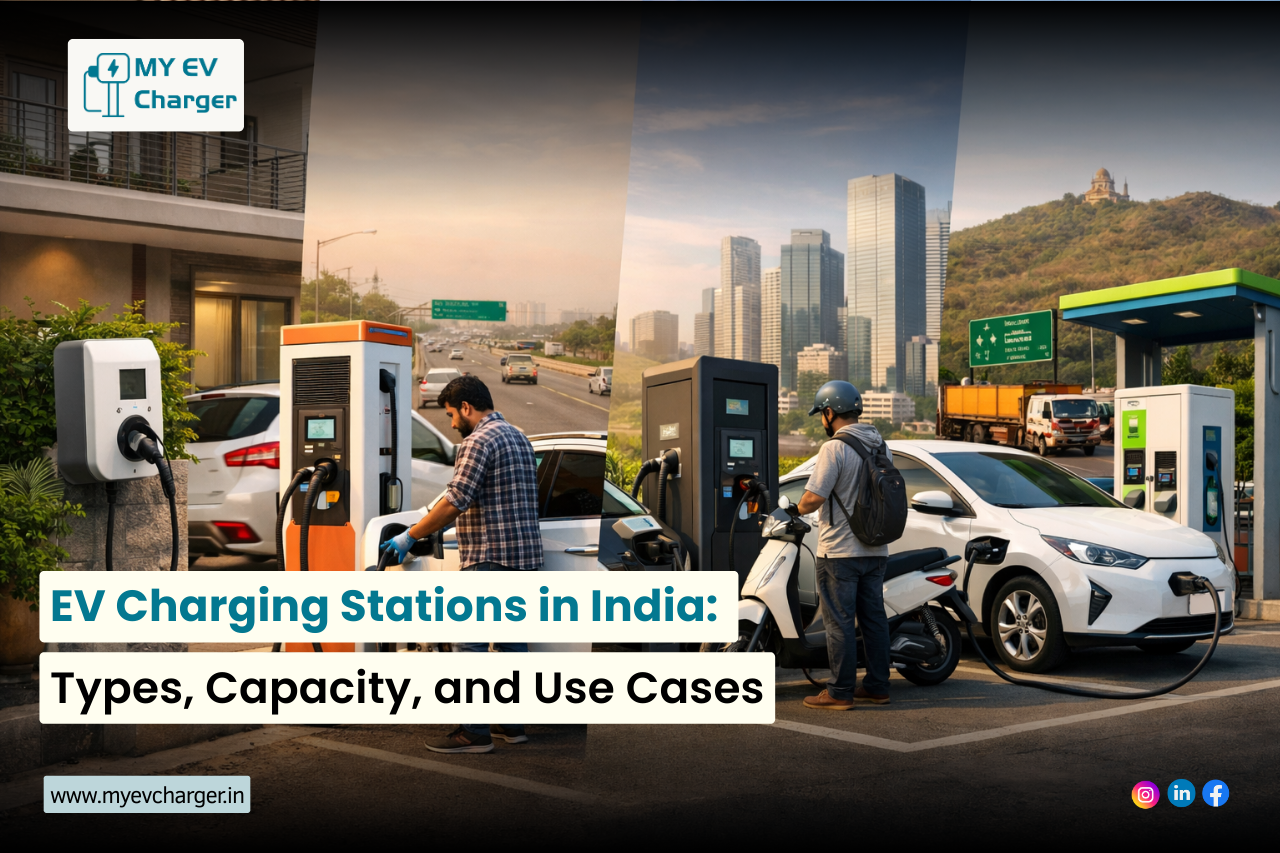
India’s electric vehicle revolution is accelerating rapidly, and at the heart of this transformation lies the critical infrastructure of EV charging stations. As more Indians switch to electric vehicles, understanding the landscape of electric vehicle charging stations becomes essential for both current EV owners and prospective buyers. These stations come in public and private setups, with deployments tailored to urban areas and highways, ensuring accessibility for daily commutes and long trips alike. Understanding EV Charging Station Infrastructure in India The network of vehicle charging stations in India has expanded significantly over the past few years, offering options like AC and DC chargers for various needs. From major metropolitan cities to national highways, charging infrastructure is becoming increasingly accessible. The government’s push toward electric mobility, combined with private sector investments, has created a diverse ecosystem of charging solutions tailored to different user needs and vehicle types. Electric vehicle charging stations in India serve various purposes, from quick top-ups during long highway journeys to overnight charging at home. The type of charging station you choose depends on several factors including your vehicle’s battery capacity, your daily driving patterns, and the urgency of your charging needs. Types of EV Charging Stations: AC vs DC Charging India primarily uses AC and DC EV charging stations, each serving distinct purposes based on charging speed and use case requirements. AC Charging Stations AC (Alternating Current) charging stations represent the most common type of electric vehicle charging station found in residential areas and workplaces. These chargers deliver alternating current at 3-22 kW, suitable for overnight or extended parking scenarios. AC chargers, such as Type 2 connectors, deliver power to your vehicle’s onboard charger, which then converts AC to DC for battery storage. Key Characteristics of AC Charging: AC charging stations are perfect for scenarios where your vehicle will be parked for extended periods. Many residential complexes and office buildings in cities like Bangalore, Mumbai, and Delhi now feature AC chargers, making it convenient for EV owners to charge while they work or sleep. DC Fast Charging Stations DC (Direct Current) fast charging stations deliver high-power direct current directly to the vehicle’s battery, bypassing the onboard charger. DC fast chargers, including CCS (Combined Charging System) and CHAdeMO standards, provide direct current up to 350 kW for quicker charging sessions, often taking just 30-60 minutes to reach 80% battery capacity. Key Characteristics of DC Charging: DC fast charging stations are game-changers for long-distance travel. Major highway corridors connecting cities like Mumbai-Pune, Delhi-Jaipur, and Chennai-Bangalore increasingly feature these high-capacity chargers, making interstate EV travel more practical than ever before. Charger Capacities and Performance Levels Capacities vary by type and location, with strategic placement ensuring optimal charging experiences for different scenarios. Low to Medium-Capacity Charging (3.3 kW – 22 kW) Urban AC stations typically range from 7.4-22 kW, ideal for homes, offices, and malls where vehicles stay parked longer. This capacity range works perfectly for daily commuters who can leave their vehicles plugged in for extended periods. Ideal Use Cases: The lower power draw makes it easier to integrate with existing electrical systems without major infrastructure upgrades, making these stations cost-effective for private installations. High-Capacity Fast Charging (30 kW – 350 kW) Highway DC stations offer 30-150 kW or more, enabling fast recharges for intercity travel at rest stops and toll plazas. These high-power chargers minimize vehicle downtime and address range anxiety for long-distance travelers. Ideal Use Cases: High-capacity DC fast chargers are essential for long-distance travel and commercial applications where vehicle downtime must be minimized. Taxi and ride-sharing services particularly benefit from these rapid charging solutions that can deliver significant range in under an hour. Public vs Private Charging Infrastructure Public Charging Stations Public electric vehicle charging stations appear in malls, metro stations, highways, and petrol pumps, featuring app-based payments and smart monitoring for broad access. These stations are accessible to all EV owners and are typically operated by companies like Tata Power, Reliance BP, Ather Energy, and other charging network providers. Advantages of Public Charging: Public charging stations often charge per-unit rates or session-based fees. Mobile applications from various charging network providers help users locate nearby stations, check real-time availability, reserve charging slots, and make seamless digital payments. Private Charging Stations Private stations suit homes, offices, and apartments, focusing on cost-effective AC setups for personal or fleet use without public turnover demands. These electric vehicle charging stations include home chargers and dedicated workplace installations, offering the convenience of charging on your own schedule. Advantages of Private Charging: Most EV manufacturers provide home charging solutions as part of their vehicle packages. A typical home installation with a 7.4 kW AC charger can fully charge most electric cars overnight, ensuring you start each day with a full battery and minimal charging costs. Deployment Strategies: Highway vs Urban Infrastructure Highway Charging Stations Highway setups prioritize DC fast chargers at high-traffic corridors to minimize downtime for long-distance drivers. The deployment of charging stations along India’s extensive highway network addresses one of the biggest concerns for EV adoption: range anxiety during intercity travel. Highway Charging Characteristics: Major national highways like NH-1, NH-8, and NH-44 now feature well-planned charging corridors at rest stops and toll plazas. These vehicle charging stations enable cross-country travel, with charging stops that align naturally with meal breaks or rest stops during long journeys, making the charging experience seamless. Urban Charging Networks Urban deployments emphasize convenience with mid-speed AC chargers in city parking and commercial hubs. Urban electric vehicle charging stations cater to city dwellers who may not have dedicated home charging facilities, as well as commercial fleet operators requiring accessible charging points. Urban Charging Characteristics: Cities like Bangalore, Delhi, Hyderabad, and Pune have witnessed remarkable growth in urban charging infrastructure. You’ll find charging stations at metro stations, multiplexes, office parks, petrol pumps, and select residential societies, making EV ownership increasingly practical for city residents without private parking arrangements. Connector Standards in India Understanding connector types is crucial for EV charging station compatibility: Type 2 (AC Charging): The most common
EV Charging Stations Near Me: How Google Finds Chargers Around You
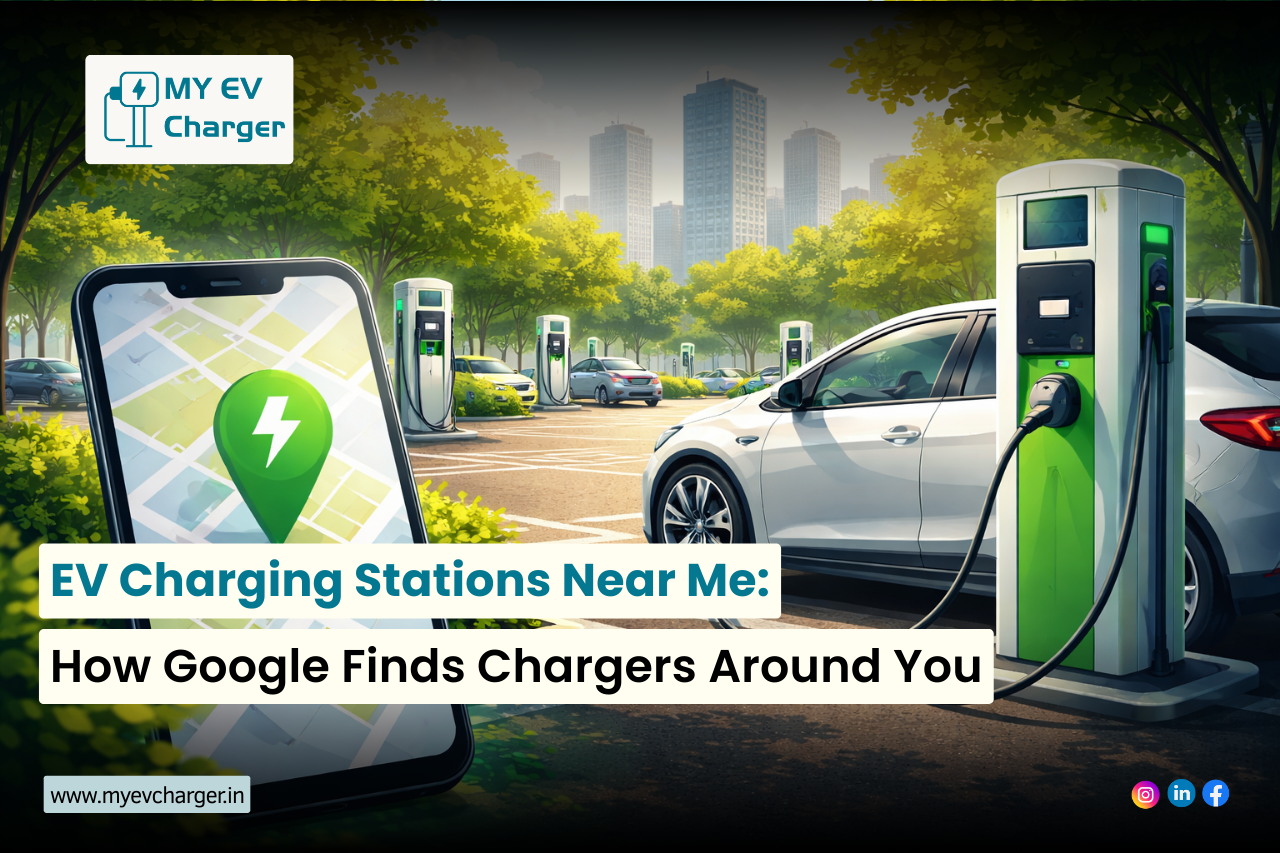
When you search for “EV charging stations near me,” Google instantly displays a map dotted with charging locations. But how does this seemingly simple process actually work? Behind every pin on your screen lies a complex network of GPS technology, mapping algorithms, real-time data verification, and constant quality control to ensure you can actually charge your vehicle when you arrive. How GPS Location Detection Powers Your Search The foundation of finding charging stations near me starts with GPS technology on your smartphone. GPS pinpoints your exact position using satellite signals, enabling Google Maps to display chargers within a practical radius around you. The moment you open the app or type “ev chargers near me,” your device transmits precise coordinates that become the center point for your search. Google Maps then cross-references your location with crowdsourced data from major charging network providers like Electrify America, ChargePoint, EVgo, and Tesla. The system prioritizes fast chargers such as Level 3 DC units, which are critical when you need a quick charge during longer trips. Real-time location sharing ensures your search results update continuously even during navigation, automatically adjusting to show the most convenient charging stations near me as you drive. Your device combines GPS with cellular tower triangulation and Wi-Fi positioning to maintain accuracy even in urban canyons or areas with weak satellite signals. This multi-layered approach ensures that when you’re running low on battery and desperately searching “ev stations near me,” the results reflect your actual position rather than an outdated or approximate location. Maps API Integration: The Technology Behind the Search Google’s Maps APIs serve as the backbone for processing location-based searches for EV charging infrastructure. These Application Programming Interfaces pull verified data from charging networks and integrate critical information like live availability status, plug types (CCS, CHAdeMO, Tesla connectors), charging speeds measured in kilowatts, and pricing information. When users search “EV charging stations near me,” the Maps API filters results by multiple criteria including distance from your current location, user ratings and review scores, charging speed ranging from Level 2 (typically 7-19 kW) to Level 3 DC fast charging (50-350 kW), and connector compatibility with your vehicle type. One particularly useful feature involves AI-powered summaries extracted from user reviews. Instead of reading through dozens of comments, Google’s system analyzes review content to describe exact locations with helpful details like “underground lot, right before exit” or “third floor of parking garage, near elevator.” These AI summaries save valuable time when you’re navigating to an unfamiliar charging station. The API also calculates distances between your current position and registered charging stations, retrieving associated details in milliseconds. It ranks locations based on a combination of proximity, ratings, availability data, and relevance to your search query. If you specifically search for fast charging or particular connector types, the algorithm adjusts its results accordingly. Common Listing Errors and How They Happen Despite sophisticated technology, listings for ev chargers near me aren’t always accurate. Several types of errors can frustrate drivers and waste valuable time. Unverified Submissions: Many listing errors originate from unverified submissions by businesses or individuals who provide incomplete or incorrect information. A business owner might claim a charging station listing but enter the wrong street address, list incompatible plug types, or fail to update the listing when equipment is replaced or removed. Phantom Stations: These are perhaps the most frustrating listing errors. Phantom stations appear on the map but no longer exist in reality, often because the charging equipment was removed months or years ago but the listing persists in Google’s database. Old data from previous mapping efforts continues to circulate, creating false expectations for drivers searching charging stations near me. Outdated Information: A station might have been relocated to a different part of a parking lot or shopping center, but the pin remains at the old location. Hours of operation may change, access restrictions might be implemented, or pricing structures could be updated without corresponding changes to the Maps listing. Incorrect Technical Specifications: Listings sometimes show wrong connector types, inaccurate charging speeds, or fail to distinguish between Level 2 and Level 3 chargers. This becomes critical when you need a specific type of charger and drive to a location only to discover incompatible equipment. Access Restriction Confusion: Some listings don’t clearly indicate that a charger is restricted to employees, residents, hotel guests, or customers only. Public listings may actually require special authorization, gate codes, or parking validation. Drivers can report these errors via Google Maps’ “Suggest an edit” feature for quick fixes. Google verifies corrections through user-submitted photos showing the actual location and equipment, multiple independent reports confirming the same issue, and direct communication with charging network operators to validate changes. Understanding Uptime and Availability Gaps One of the most significant challenges with searching for ev stations near me is the “uptime gap” the difference between a charger appearing available on your map and actually being functional when you arrive. Network Outages: Charging stations depend on internet connectivity to process payments and communicate status. Network outages can render chargers non-functional even when they appear operational on mapping platforms. Broken Equipment: Physical damage to charging cables, connectors, or the charging unit itself creates downtime. Unlike gas station pumps that maintain uptime rates above ninety-nine percent, EV charging stations can experience uptime rates as low as seventy to eighty percent in some regions. Peak-Hour Queues: Even when chargers are functional, all ports might be occupied during high-traffic periods. These peak-hour queues often aren’t reflected in real-time feeds, so you might arrive at a station showing availability only to find a waiting line. Data Lag Issues: Platforms like Google show port status when charging network providers share this information through API integrations. However, gaps persist when data transmission lags behind actual conditions. A charger might break down at noon but continue showing as available until the evening data refresh. Weather-Related Problems: Extreme temperatures affect charging equipment reliability. Cold weather can slow charging speeds and cause connector issues, while excessive heat triggers automatic safety shutdowns.
The EV Charging impediment: How Unreliable Public Chargers Are Slowing India’s Electric Transition
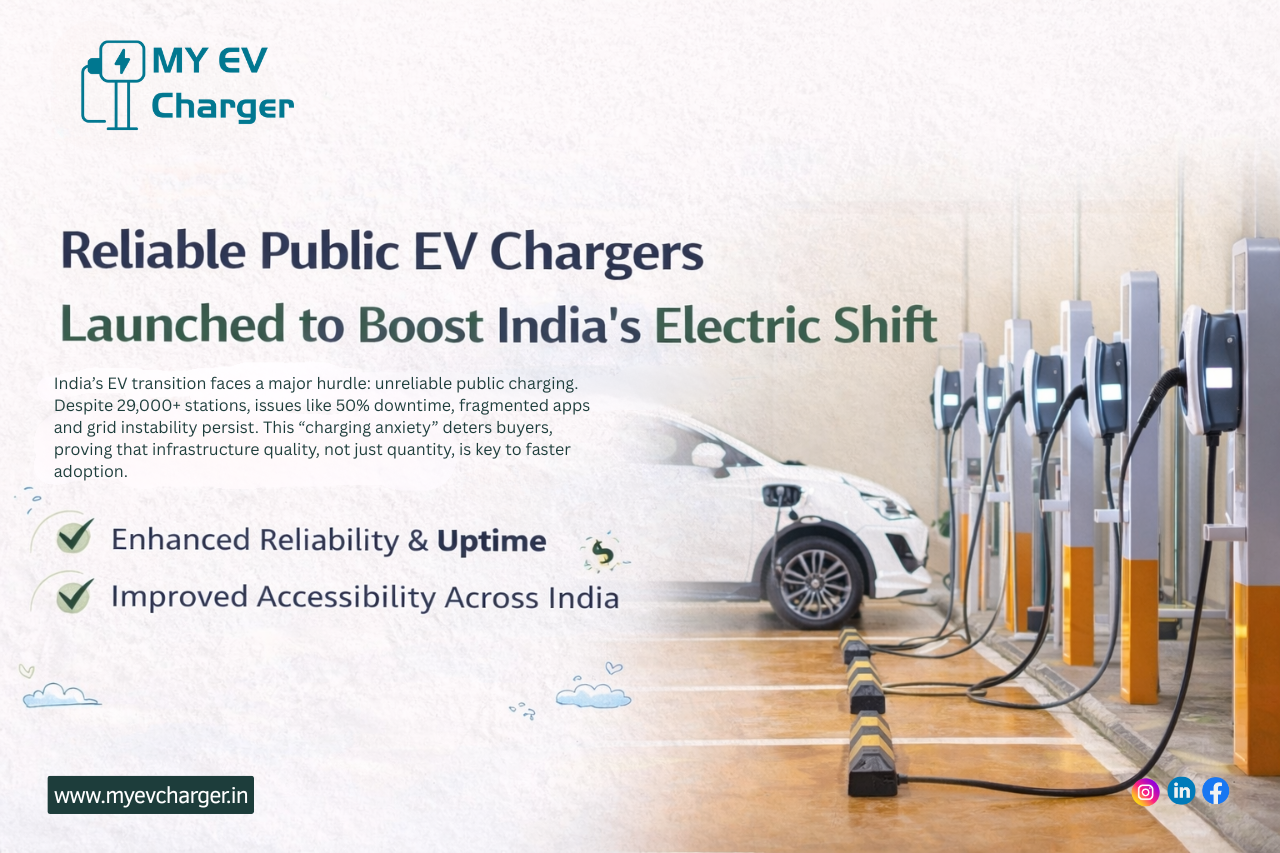
India’s electric vehicle (EV) journey is gaining momentum, but cracks in public charging reliability are beginning to show especially on highways, where fast, dependable charging is critical for long-distance travel. At a busy EV charging hub on the outskirts of Dharwad, Karnataka, Jatinder Singh, the owner of a premium electric SUV, voices a concern shared by many EV users today. “Most public chargers don’t deliver the power they promise on the app,” he says, glancing at the charging screen while waiting longer than expected. The charging hub located within a popular food court along the Pune–Bengaluru highway is among the most frequented stops for EV drivers. Its appeal lies not only in food and amenities but also in its reputation for being relatively reliable compared to other public chargers on the route. Yet, even here, the gap between advertised charging speeds and real-world output is impossible to ignore. India’s Public Charging Landscape: Growth Without Assurance According to data from NITI Aayog’s e-Amrit Charging Map, India currently has 29,277 active public EV chargers. States like Maharashtra and Karnataka lead in functional infrastructure, and the Pune Bengaluru highway boasts the highest density of charging stations on any major highway in the country. As of December 2025, the corridor has 60 operational charging stations, with 49 more commissioned. On paper, this looks like impressive progress and in many ways, it is. Higher-wattage DC fast chargers are becoming more common, and EV range anxiety has reduced compared to the early days of electric mobility. However, reliability not availability has emerged as the biggest challenge. The Reality of Long-Distance EV Travel This issue becomes starkly evident on long highway drives. During a nearly 3,000-km journey from Mumbai to Kochi via Bengaluru in a long-range luxury electric SUV, the promise of seamless interstate EV travel was repeatedly tested. With a real-world range of around 600 km, modern long-range EVs have made cross-state journeys technically feasible. Several Indian-made EVs now offer even larger battery packs, encouraging buyers to consider EVs beyond city use. “I bought my EV mainly for long-distance drives,” says Naman Taneja, a Mumbai-based entrepreneur who frequently travels to Goa, Coonoor, and Coorg. “Range isn’t the issue anymore. Charging reliability is.” Uneven Power Delivery: The Hidden Delay In practice, charging speeds rarely match what’s advertised. A charger rated at 60 kW often delivers only 45–50 kW, while a 120 kW charger may struggle to cross 80 kW. This shortfall adds precious minutes sometimes hours to travel plans. At the Dharwad hub, even with access to a 120 kW DC fast charger, output frequently drops by half. On one occasion, the vehicle received just 60 kW, despite the second charging gun being unused. For the next car in line, the story was the same. Unexpected session dropouts add to the frustration. Drivers are alerted via mobile apps, triggering hurried walks back from restaurants to check whether charging has stopped or failed entirely. When Chargers Go Offline Several charging locations offer ideal highway access, ample parking, and food options only for drivers to discover that the chargers are marked “offline” on the app. According to staff at some sites, technical faults have become more frequent. While most charging stations display toll-free helpline numbers, technicians can take days to arrive, especially in remote locations. Ironically, shutting down the entire station is sometimes the fastest way to trigger intervention from operators such as ChargeZone. At another location, a single 140 kW fast charger was available and unoccupied. Yet, after delivering just 80 kW and charging the battery to 40%, the system malfunctioned adding another unplanned delay. Grid Constraints and PSU Challenges The core problem lies in grid readiness. The expansion of public EV chargers has outpaced electricity distribution planning. Across Maharashtra, Karnataka, and Kerala, load-shedding and power interruptions regularly disrupt charging sessions. Several chargers installed by public sector undertakings, including oil marketing companies, remain non-functional due to unresolved coordination issues with state electricity distribution companies. Commissioning a charger, it appears, is only half the battle. Too Many Apps, Too Many Glitches For EV users, charging isn’t just about power it’s also about software. India’s public charging ecosystem is fragmented across multiple apps, each with its own learning curve. Popular platforms include Statiq, Jio-bp, ChargeZone, and Tata Power EZ Charge. Some apps require minimum wallet balances that are non-refundable. Others show chargers as “occupied” due to software logic, even when the same user is trying to initiate a session. In certain cases, the charging gun cannot be plugged in unless the station is first selected on the app creating confusion for new users. While experienced EV owners eventually adapt, first-time highway users face a steep learning curve, making long-distance EV travel intimidating. OEMs Step In to Fill the Gap Recognising these challenges, some automakers are attempting to smooth the charging experience. Mercedes-Benz India has introduced MB.Charge, a unified platform that allows its customers to access multiple public charging networks through a single interface. The system enables seamless authentication and automatic payment, reducing dependence on multiple third-party apps. For upcoming electric models, charging transactions will be handled directly through the vehicle’s operating system. While exclusive to Mercedes-Benz owners, the move implicitly acknowledges that public charging fragmentation remains a barrier to wider EV adoption. Highway Anxiety Persists “I enjoy my EV’s performance the most on highways,” says Ajay Krishnakumar, a Bengaluru-based professional. “But I’m constantly anxious about whether the next charger will even work.” Another EV driver recounts being forced to detour 24 km after arriving at a charging hub that had unexpectedly gone offline. Globally, fast charging is the backbone of EV adoption. In markets like China and the US, 50 kW to 350 kW chargers are common along highways. In India, most new EVs can already accept up to 150 kW, theoretically allowing a 30–40% top-up in under 20 minutes. Instead, charging apps now cautiously prefix speeds with “up to”, reflecting real-world uncertainty. Even with careful planning, public charging can add 1.5 to 2 hours to a long-distance journey.