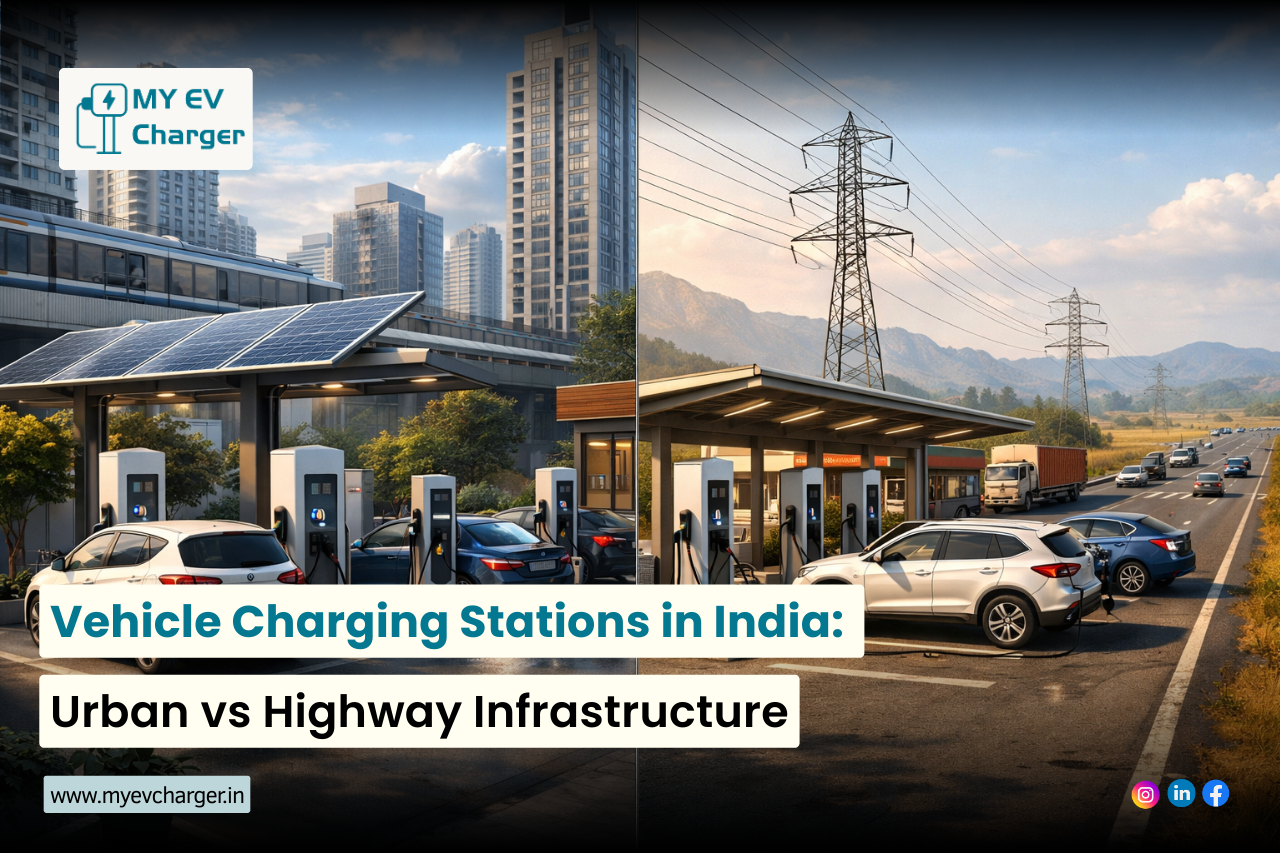
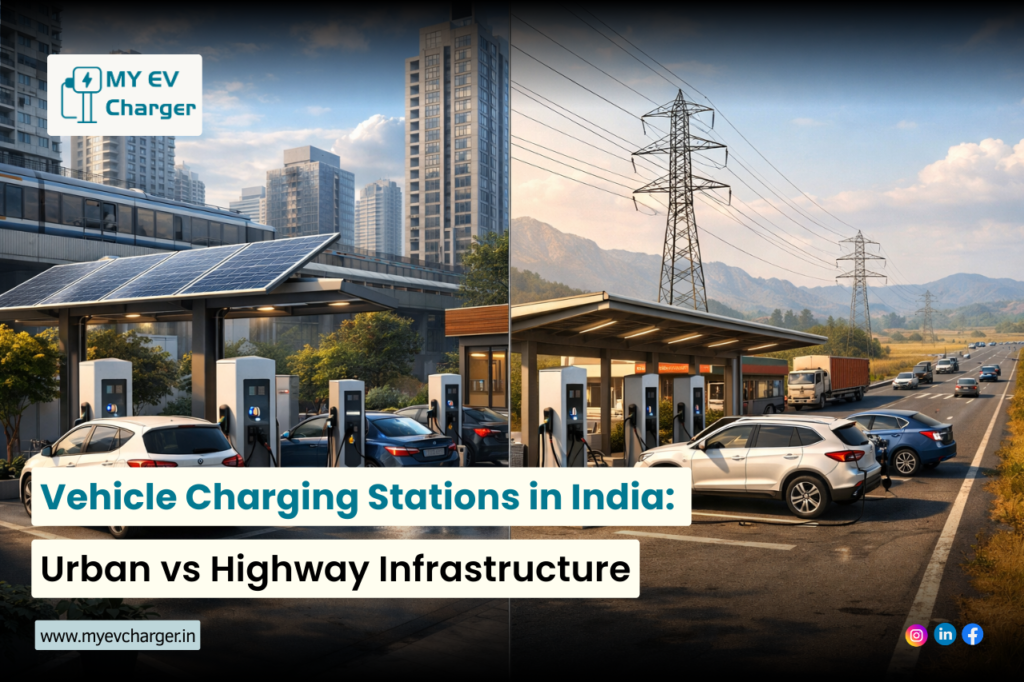
The rapid expansion of vehicle charging stations across India reflects a carefully orchestrated strategy to support the nation’s electric mobility transition. As EV adoption accelerates, infrastructure development has split into two distinct models—urban and highway—each addressing unique challenges in charger placement, load management, and land acquisition. Understanding these differences reveals why India’s EV charging ecosystem requires parallel investment in both frameworks.
The Strategic Divide: Two Infrastructure Models
Electric vehicle charging stations in cities and highways operate under fundamentally different constraints and objectives. Urban infrastructure prioritizes convenience and integration into daily routines, while highway networks focus on eliminating range anxiety for intercity travelers. This distinction shapes everything from equipment selection to business models, creating complementary rather than competing systems.
The government’s FAME II (Faster Adoption and Manufacturing of Electric Vehicles) scheme has accelerated this dual-track approach, mandating specific coverage requirements that acknowledge the unique role each infrastructure type plays in India’s EV ecosystem.
Urban Charging Infrastructure: Navigating Density and Constraints
Placement Logic for City Networks
Urban EV charging stations follow human movement patterns rather than mere geographic distribution. Cities concentrate chargers at high-dwell-time locations where vehicles naturally park for extended periods:
Commercial Destinations: Shopping malls, cinema complexes, and entertainment venues provide 2-4 hour windows—perfectly aligned with Level 2 AC charging requirements. Users shop or dine while vehicles charge, transforming waiting time into productive activity.
Workplace Integration: Office complexes and IT parks serve employees who park for 8+ hours daily. These locations offer ideal conditions for slower AC chargers that fully replenish batteries during work hours without straining the grid.
Residential Solutions: Apartment complexes and housing societies increasingly mandate charging station infrastructure in parking areas. This addresses overnight charging needs—the primary use case for urban EV owners—while optimizing existing real estate.
Transit Hubs: Metro stations, bus depots, and railway parking lots capture commuters using multimodal transportation. These locations naturally aggregate EV users and provide extended parking durations.
The placement philosophy emphasizes visibility and accessibility. Urban stations must be conspicuous near daily destinations to minimize range anxiety and encourage adoption, particularly among first-time EV buyers still calibrating their charging habits.
Load Management in High-Density Settings
Cities face acute electrical infrastructure challenges. Municipal grids already strain under residential, commercial, and industrial demand. Adding electric vehicle charging station networks requires sophisticated load management:
Dynamic Load Balancing: Smart systems monitor real-time grid capacity and distribute available power across multiple chargers. When five vehicles connect simultaneously, the system intelligently allocates capacity rather than attempting to deliver full power to all units—preventing circuit overloads and grid failures.
Peak-Hour Mitigation: Urban operators cap charge rates during peak consumption periods (typically 6-11 PM when residential and commercial demand peaks). Dynamic pricing incentivizes off-peak charging, with rates 30-40% lower between 11 PM and 6 AM, naturally distributing load away from stressed periods.
Application-Based Management: Platforms like Tata Power EZ Charge enable users to locate stations, check real-time availability, and even pre-book charging slots. This prevents congestion and allows operators to predict and manage load patterns more effectively.
Grid Integration Technology: Advanced urban networks incorporate battery storage systems that charge during low-demand periods and discharge to serve EVs during peak hours, effectively decoupling charging demand from real-time grid stress.
Overcoming Urban Land Scarcity
Land constraints represent the most acute challenge for urban vehicle charging stations. In metropolitan centers like Mumbai, Delhi, or Bangalore, real estate costs make standalone charging infrastructure economically challenging.
Retrofit Solutions: Cities integrate chargers into existing infrastructure—fuel stations, municipal parking lots, and even street-side parking spots converted to charging bays. This approach maximizes existing assets without requiring new land acquisition.
Vertical Integration: Multi-level parking structures increasingly dedicate floors or sections to EV charging, using vertical space efficiently in land-scarce environments.
Public-Private Partnerships: Municipalities offer streamlined permitting and reduced fees for operators who install chargers in government-controlled parking areas, metro stations, or civic centers, easing land access barriers.
Compliance Framework: All installations must meet BIS (Bureau of Indian Standards) safety and technical standards, ensuring scalability and interoperability across different charger brands and vehicle types critical in space-constrained urban deployments where every installation must serve maximum users.
Highway Charging Infrastructure: Speed and Coverage
Strategic Corridor Development
Highway EV charging stations follow government mandates under FAME II, which requires setups every 25 kilometers on major corridors. This creates “e-corridors” connecting Tier-1 and Tier-2 cities, ensuring no EV risks running out of charge between stations.
Placement Imperatives: Highway stations cluster at rest areas, toll plazas, and existing fuel service stations. This co-location provides travelers essential amenities—restrooms, food, shelter—during the 20-30 minute fast-charging sessions required for DC chargers.
Coverage Priority: The Golden Quadrilateral, major expressways, and interstate highways receive priority deployment. Routes like Delhi-Jaipur, Mumbai-Pune, and Bangalore-Chennai now feature comprehensive charging networks that enable worry-free long-distance EV travel.
Technology Focus: Highway infrastructure predominantly deploys DC fast chargers delivering 50-150kW output, compared to urban AC chargers at 3-7kW. This dramatic speed difference matches traveler expectations for minimal disruption to journey times.
Highway Load Management Strategies
Unlike urban networks managing daily cyclic demand, highway stations handle unpredictable traffic surges—especially during holidays and weekends when intercity travel peaks.
Remote Monitoring Systems: Operators track charger status, usage patterns, and performance metrics in real-time, enabling rapid response to failures and predictive maintenance that maximizes uptime—critical when alternative stations might be 25+ kilometers away.
SOC Limiting: During high-traffic periods, systems cap charging to 80-85% state of charge rather than 100%. This reduces per-vehicle charging time by 30-40% (the final 15-20% charges slower), allowing more vehicles to access chargers during congestion without significantly impacting range.
Congestion Management: Smart queuing systems and app-based notifications inform approaching drivers of wait times, allowing them to adjust routes or timing to avoid bottlenecks at popular stations.
Grid Coordination: Highway stations often require dedicated transformers and high-voltage connections. Operators coordinate with state electricity boards to ensure adequate capacity, sometimes installing solar canopies or battery storage to reduce grid dependency during peak periods.
Land Acquisition Advantages
Highway stations enjoy significantly easier land access compared to urban counterparts:
Regulatory Support: Government highways and state road development corporations allocate land specifically for charging infrastructure, often at nominal costs to encourage network expansion.
OMC Partnerships: Oil marketing companies (Indian Oil, Bharat Petroleum, Hindustan Petroleum) integrate charging station facilities into existing fuel station forecourts, leveraging established real estate and customer flow.
Space Availability: Highway locations accommodate larger footprints with multiple charging bays, customer facilities, and future expansion areas—luxuries impossible in urban settings.
Simplified Approvals: While still regulated, highway installations face streamlined permitting compared to the complex multi-agency approvals required in municipal jurisdictions.
Key Infrastructure Comparisons
Understanding the systematic differences helps clarify why both models require simultaneous development:
Charger Technology: Urban areas predominantly deploy AC chargers (3-22kW) suitable for extended parking, while highways prioritize DC fast chargers (50-150kW) for rapid turnaround.
Placement Philosophy: Cities focus on daily destination hubs—malls, offices, residences—where people naturally spend time. Highways mandate coverage every 25 kilometers on major corridors regardless of commercial viability.
Load Management Approach: Urban systems balance against peak municipal demand through dynamic pricing and rate limiting. Highway networks manage unpredictable traffic surges through SOC caps and congestion controls.
Land Economics: Cities face extreme scarcity requiring retrofit solutions and multi-use integration. Highways access government-allocated or OMC-partnered land with ample space for growth.
Business Models: Urban stations rely on high utilization of multiple daily users at lower speeds. Highway stations depend on volume during peak travel periods with premium fast-charging rates.
The Technology Enablers
Mobile applications have become critical infrastructure components. Platforms like Tata Power EZ Charge, Statiq, and ChargeZone provide users real-time station location, availability status, pricing information, and booking capabilities. This digital layer reduces range anxiety, optimizes charger utilization, and enables operators to manage demand proactively.
Integration with vehicle navigation systems now allows EVs to automatically route through compatible charging stations, calculate arrival battery percentages, and even pre-condition batteries for optimal charging speeds—creating seamless user experiences that rival conventional refueling.
Future-Proofing India’s Charging Ecosystem
As EV adoption accelerates, infrastructure must anticipate 5-10 year demand curves. Urban installations increasingly deploy modular electrical systems allowing charger additions without complete reinstallation. Highway stations install oversized electrical infrastructure and expandable charger layouts that accommodate faster future technologies.
Both models incorporate emerging capabilities—battery swapping integration, vehicle-to-grid bidirectional charging, and autonomous vehicle support—ensuring infrastructure relevance as the EV ecosystem evolves.
Conclusion
India’s vehicle charging stations infrastructure reflects a sophisticated understanding that urban and highway networks serve fundamentally different purposes. Urban systems optimize for convenience, land efficiency, and load management within existing city rhythms. Highway infrastructure prioritizes speed, reliability, and comprehensive coverage to eliminate intercity range barriers.
The success of India’s electric mobility transition depends on parallel investment in both models. Neither can substitute for the other—cities need convenient daily charging access, while highways require rapid, reliable corridor coverage. As the electric vehicle charging station network matures, the synergy between thoughtfully placed urban infrastructure and strategically distributed highway facilities will determine how quickly EVs transition from early adopters to mainstream transportation, supporting India’s sustainability and energy security goals.