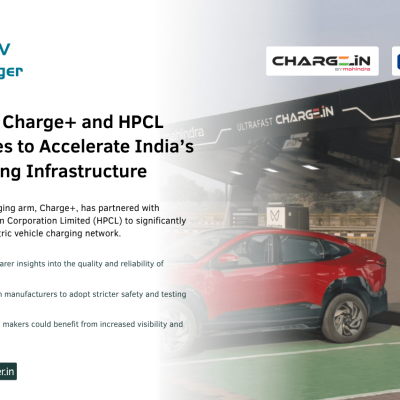
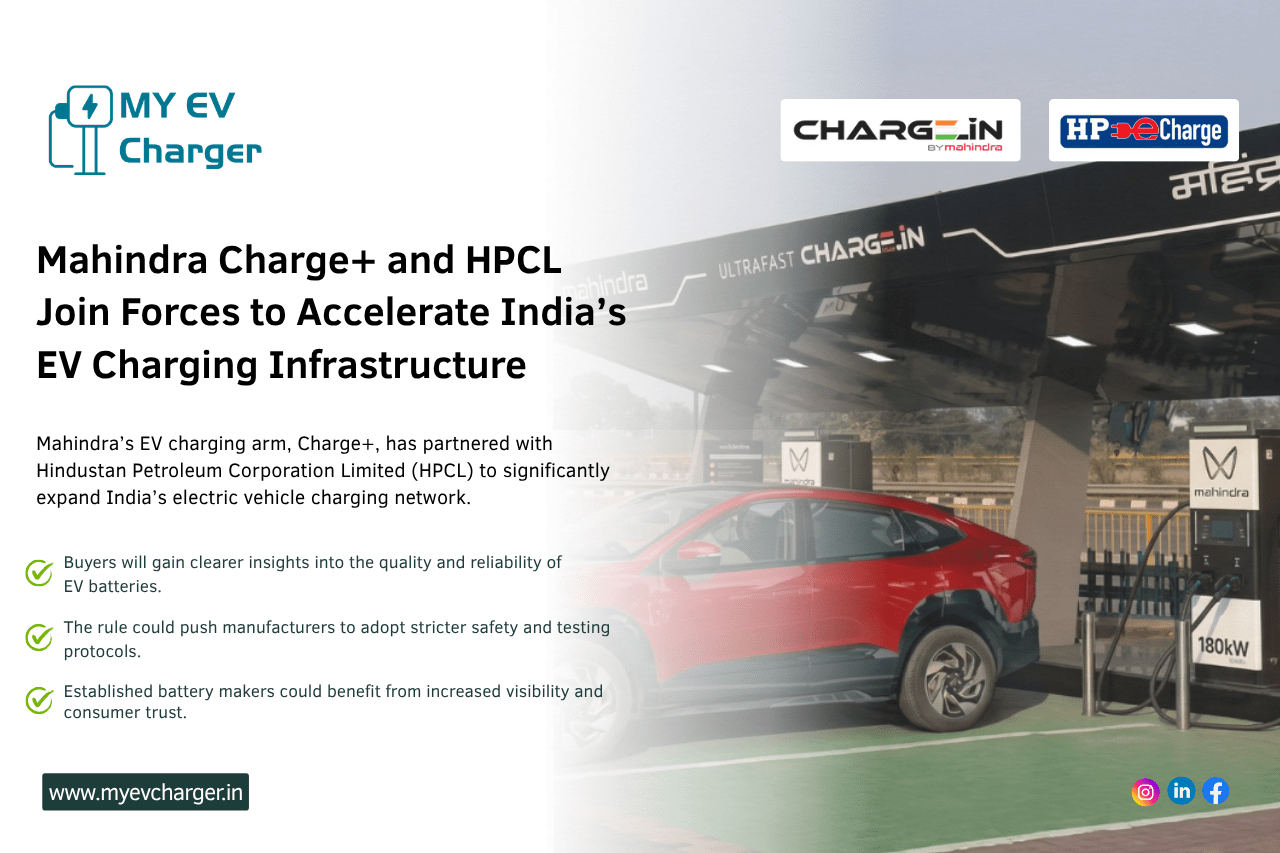
What: Mahindra Group’s charging arm Charge_iN has partnered with HPCL to set up EV charging stations at HPCL fuel stations across India.
The Number: The charging stations under this partnership will feature 180 kW dual-gun chargers, while HPCL already operates over 24,400 retail outlets and more than 5,400 EV charging stations under the HP e-charge brand.
The Impact: The partnership aims to use HPCL’s fuel station network to expand public charging access, improve EV user experience, and support faster EV adoption in India.
The Core News
Mahindra’s EV charging business, Charge_iN, has entered into a partnership with Hindustan Petroleum Corporation Ltd. (HPCL) to deploy EV charging stations at HPCL fuel stations across the country. The move is designed to leverage HPCL’s large existing fuel retail footprint to strengthen public charging availability for EV users in India.
According to the announcement, the charging stations rolled out under this collaboration will use 180 kW dual-gun chargers aimed at offering faster and more reliable charging for electric four-wheelers. That makes this partnership particularly relevant for the growing passenger EV segment, where charging speed and highway accessibility are becoming more important purchase considerations.
The announcement also underlines the scale advantage of HPCL’s network. The company operates over 24,400 retail outlets nationwide and already runs more than 5,400 EV charging stations under its HP e-charge brand. Mahindra said Charge_iN is part of its broader vision to build an ultrafast charging network and align with India’s push to strengthen public EV charging infrastructure.
Breaking Down the Update
- Partnership signed: Charge_iN by Mahindra and HPCL will work together to expand EV charging at HPCL fuel stations.
- Deployment model: The partnership will use HPCL’s existing fuel station footprint instead of building from scratch.
- Charger type: The stations will feature 180 kW dual-gun chargers.
- Vehicle segment focus: These chargers are intended for electric four-wheelers.
- HPCL scale: HPCL has 24,400+ outlets across India.
- Existing charging base: HPCL already operates 5,400+ EV charging stations under HP e-charge.
- Strategic angle: Mahindra is positioning Charge_iN as part of its ultrafast charging and EV ecosystem strategy.
How this will help Indian EV Market
This partnership matters because India’s EV adoption story is increasingly becoming a charging confidence story. Many buyers are now less worried about whether EV technology works and more concerned about whether they will get fast, reliable, and visible public charging when they actually need it. By using HPCL’s fuel station network, Mahindra and HPCL are addressing one of the most practical barriers in the market: charging access in familiar, high-traffic locations.
For the Indian EV market, this helps in multiple ways. First, it reduces infrastructure friction. Building chargers at existing fuel stations is usually faster and more intuitive for users than creating entirely new charging destinations. Second, the use of 180 kW dual-gun chargers improves the quality of infrastructure being added, not just the count. Fast chargers at strategic locations can make intercity travel and premium EV ownership more viable. Third, this move helps normalize the idea that fuel stations are gradually becoming multi-energy mobility points, not just petrol and diesel outlets.
It also sends a strong ecosystem signal. When an OEM-linked charging brand partners with a major oil marketing company, it shows that the market is shifting from scattered charging deployment to more structured infrastructure collaboration. India will need exactly this kind of network-led execution if public charging is to keep pace with rising EV sales. In that sense, this is not just another partnership announcement. It is part of the larger transition from charger presence to charger usefulness.
Conclusion & Next Steps
The Charge_iN-HPCL partnership is important because it combines OEM-backed charging ambition with nationwide fuel-station infrastructure. That combination could help public charging become more visible, faster, and more dependable for Indian EV users. The next thing to watch will be rollout speed, charger uptime, and whether these stations are placed in the right corridors and urban nodes to create real user value.