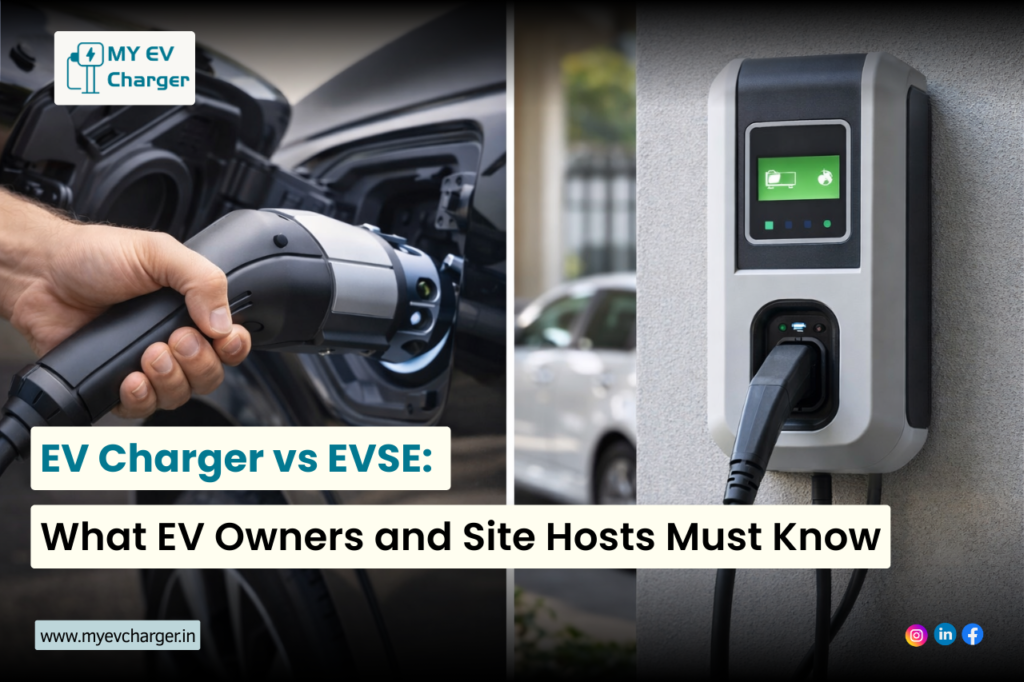
EV owners and site hosts often confuse EV chargers with EVSE, but the distinction is crucial for safe, efficient charging. EVSE (Electric Vehicle Supply Equipment) acts as a smart controller, while the actual “charger” is onboard the vehicle or in DC fast setups. Understanding this difference can save you money, prevent safety issues, and ensure you’re installing the right equipment for your needs.
Key Definitions: EVSE vs EV Charger
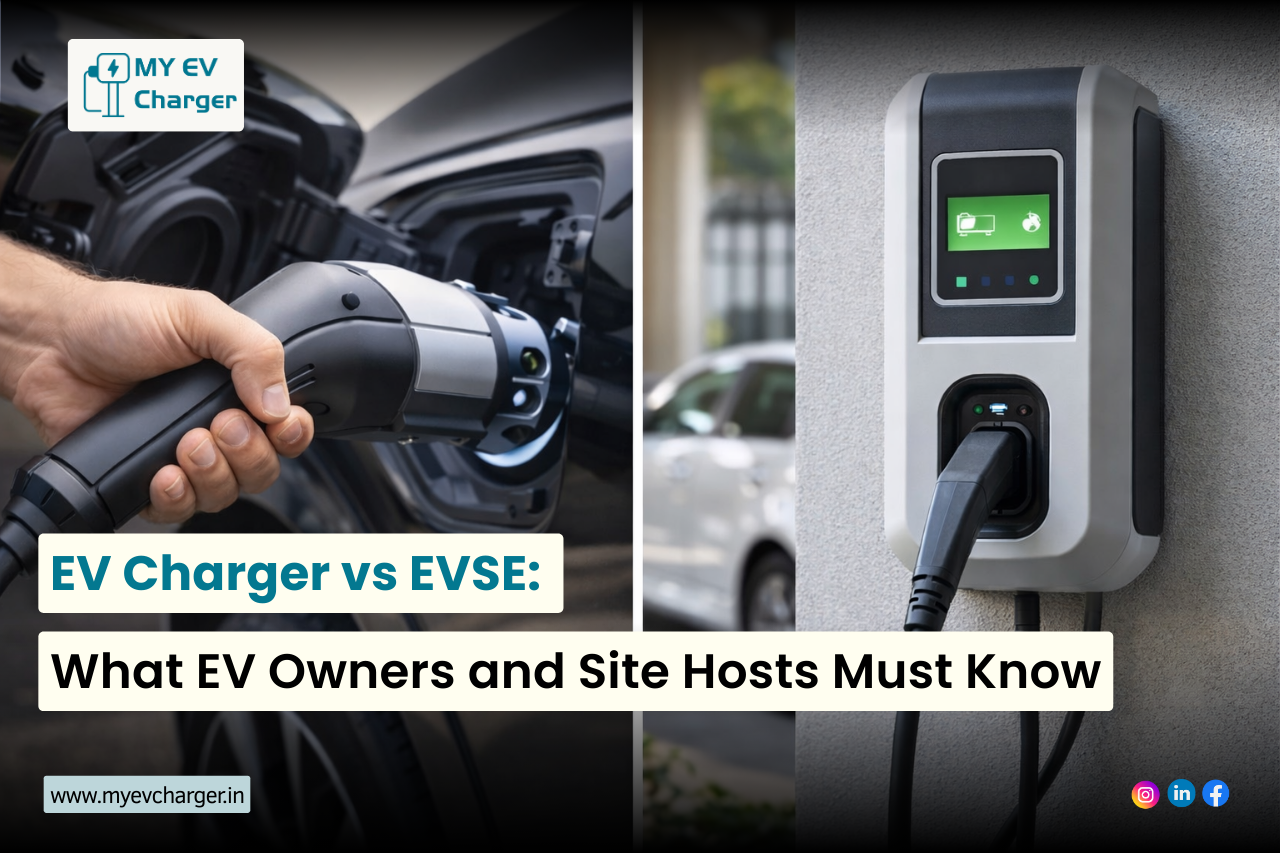
EVSE is the external hardware often called an “EV charger” or “EVSE charging station” that connects power from the grid to your car. It includes a cable, plug, and control box that monitors safety factors like grounding, temperature, and current limits, communicating with the vehicle via a digital handshake to ensure everything is working correctly before and during charging.
The true EV charger converts AC to DC power: for Level 1 and 2 charging, this happens inside the car’s onboard charger; for Level 3 DC fast chargers, it’s built into the station itself. While people use terms like “car charger EV” or “EVSE charger” interchangeably in everyday conversation, EVSE doesn’t actually convert power it’s a safety gatekeeper that ensures electricity flows safely to your vehicle.
Understanding the Core Differences
| Aspect | EVSE (Supply Equipment) | EV Charger (Power Converter) |
| Function | Controls power flow, safety checks | Converts AC to DC for battery |
| Location | External station or portable unit | Onboard vehicle (L1/L2) or station (L3) |
| Common Terms | EVSE charger, EVSE charging station | Actual charging hardware |
| Speed Impact | Limits amps based on circuit | Determines max rate (e.g., 25 mi/hr L2) |
This table highlights why mixing terms leads to confusion EVSE ensures safe delivery, but charging power depends on your car’s capabilities.
Why This Matters for EV Owners
EV owners must know EVSE dictates max current (e.g., 12A on 120V or 32A on 240V), not the car’s full potential. A cheap EVSE might bottleneck a fast-charging EV, like using a slow “granny charger” for top-ups when your vehicle could handle much more power.
Here’s what this means in practice: if your EV has a 7.2 kW onboard charger and you plug into a 9.6 kW EVSE charging station, your vehicle will only charge at 7.2 kW because that’s the maximum your onboard charger can process. Conversely, if you use a low-powered EVSE with a high-capacity onboard charger, the EVSE becomes the bottleneck.
Portable EVSE offers flexibility for travel, plugging into various outlets with built-in protections against overloads. These units typically come with interchangeable adapters for different outlet types, making them ideal for EV owners who charge at multiple locations. Always match EVSE ratings to your circuit to avoid trips or fires this is non-negotiable for safety.
Essential Guide for Site Hosts
Hosts installing “EV charging stations” buy EVSE units with controllers for monitoring and billing. Smart EVSE integrates telematics for usage data, vital for offices or apartments managing load across multiple charging points.
Choose J1772 or CCS-compatible EVSE for broad vehicle support; hardwired Level 2 boosts speed over portable options and provides a more permanent, professional installation. Factor in grid strain EVSE brains prevent overloads during peak times through intelligent load management features that balance power distribution across multiple vehicles.
For commercial installations, consider networked EVSE charging stations that allow remote monitoring, usage reporting, and payment processing. These features aren’t just conveniences they’re essential for managing charging infrastructure at scale and ensuring reliable uptime for users.
DC Fast Charging: The Exception
DC fast charging stations are true chargers, not EVSE. These Level 3 units contain the actual charging hardware within the external equipment, converting AC to DC before sending power to your vehicle. This bypasses your EV’s onboard charger entirely, allowing for charging speeds that can add 80% charge in 20-30 minutes.
This is why DC fast chargers are significantly more expensive than Level 2 EVSE chargers they contain sophisticated power conversion equipment rather than just control and safety monitoring systems.
Choosing the Right Equipment
Prioritize certified EVSE from reputable brands for safety features like leakage detection, ground fault protection, and automatic shut-off capabilities. Certifications like UL or ETL listing ensure the equipment meets rigorous safety standards.
For home use, a Level 2 EVSE charger (7-19 kW) adds 25+ miles per hour of charging; public sites need robust models with app controls, weather-resistant enclosures, and vandal-proof designs. The higher initial investment in quality equipment pays dividends in reliability and safety.
Budget tip: Basic EVSE starts around a few hundred dollars, but smart versions pay off via energy savings and uptime. Features like scheduling allow you to charge during off-peak hours when electricity rates are lower, potentially saving hundreds annually. Verify compatibility with your EV model to maximize “car charger EV” performance some vehicles work better with certain EVSE brands due to communication protocol nuances.
Smart EVSE Features Worth Considering
Modern EVSE charging stations offer capabilities that extend far beyond basic power delivery. WiFi or cellular connectivity enables remote monitoring and control through smartphone apps. Load management allows multiple units to intelligently share available electrical capacity, preventing circuit overloads while maximizing charging efficiency across your fleet.
For commercial installations, payment processing integration is essential, allowing users to pay via credit card, RFID card, or mobile app. Access control features restrict usage to authorized users, critical for workplace or multifamily installations. Energy management systems can integrate with building management platforms to optimize overall electrical usage.
Installation Considerations
Level 1 EVSE uses standard 120V outlets and requires no special installation, though charging is slow (3-5 miles of range per hour). Level 2 EVSE charging stations require 240V circuits, similar to electric dryers, and typically need professional installation with dedicated circuits rated for continuous loads. DC fast chargers need substantial three-phase power, often requiring utility infrastructure upgrades that can cost tens of thousands of dollars.
Site hosts should work with qualified electricians who understand EV charging requirements. The electrical panel capacity, wire gauge, circuit breaker sizing, and conduit routing all must be properly designed for your EVSE charger installation to ensure safety and compliance with electrical codes.
Common Misconceptions Cleared Up
Higher power doesn’t always mean faster charging for your specific vehicle because the onboard charger sets the ultimate limit. You don’t need the most expensive EVSE charging station for home use your vehicle’s capabilities should guide the decision, not marketing hype.
“Level 2” doesn’t mean a specific power level it’s a category that includes various outputs from 3.3 kW to 19.2 kW. Finally, while the term “EV charger” is technically incorrect for AC equipment, it’s become standard usage and understanding the real distinction is what matters most.
Making Your Decision
Understanding that EVSE is the safety controller while your car contains the actual charger empowers smarter purchasing decisions. Match your EVSE charging station to your vehicle’s onboard charger capacity, consider future-proofing with slightly higher-rated equipment, invest in safety certifications and smart features that add real value, and ensure proper professional installation for permanent setups.
Whether you’re charging at home with a basic car charger EV setup or managing commercial EVSE charging stations, this knowledge ensures safe, efficient, and cost-effective electric vehicle charging for years to come.