Chargers

AC EV chargers

An AC charger supplies alternating current, and the car's built-in onboard charger converts it to charge the battery. That makes AC chargers simpler and far cheaper to buy and install than DC fast chargers, and many run on an ordinary single-phase home connection.

They suit places where vehicles stay parked for hours: homes, housing societies, offices and hotels. Compare Type 2 chargers from 3.3 kW to 22 kW below, then send one enquiry to the brand you choose.

Connector: Type 2 for most carsSupply: 1-phase up to 7.4 kW, 3-phase for 11 and 22 kWRange: 3.3 to 22 kW
3.3 kWSingle-phase

Two- and three-wheelers, and overnight top-ups for cars.

7.4 kWSingle-phase

The usual choice for homes and society parking. Most cars charge fully overnight.

11 kWThree-phase

Faster home and office charging for cars whose onboard charger accepts 11 kW.

22 kWThree-phase

Shared and commercial parking. A car charges only as fast as its onboard charger allows.

All AC chargers

6 chargers listed. Brands pay to be listed on My EV Charger; specs are as published by each brand.

Manufacturer? Get listed
Power
Brand
Roadgrid GRID Dash Type 2 AC EV charger Type 2 AC
Roadgrid

GRID Dash Type 2

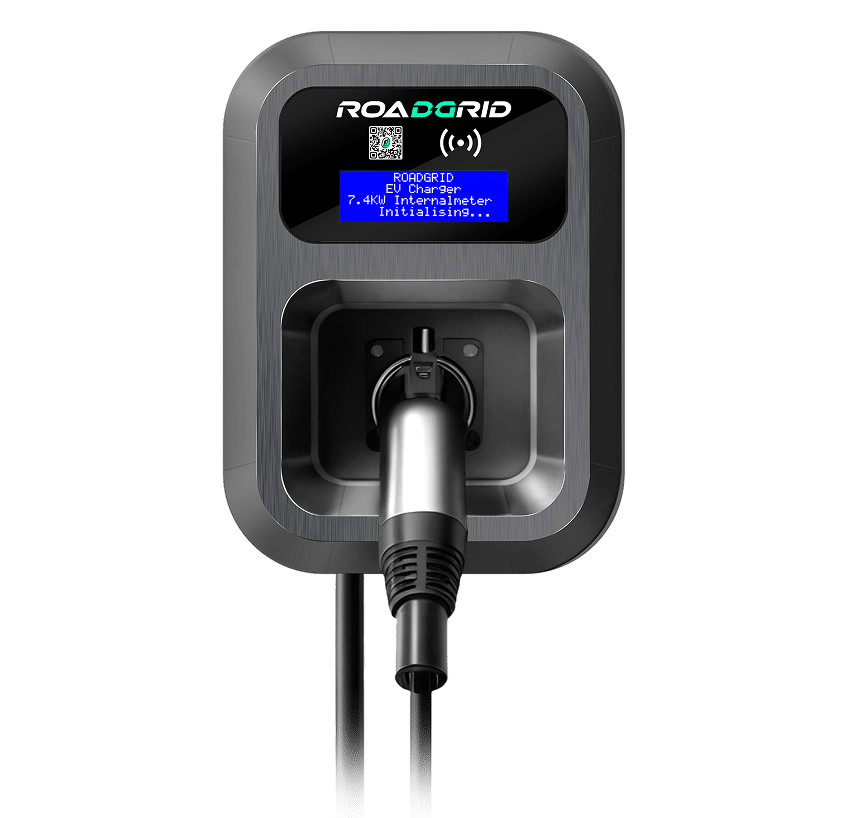
Smart AC wall box with a built-in QR code and RFID reader for payment, an LCD that shows live charging status, and a compact flush-fit body for indoor or outdoor walls. Roadgrid pitches it for homes, housing societies, offices and hotel parking.

  • QR and RFID payment
  • LCD status display
Power
Not published
Supply
Not published
Connector
Type 2
Protocol
Not published
Protection rating
Not published
Certification
Not published
Enquire Specs as published by Roadgrid
Belectriq AC Type 2 Charger AC EV charger 3.3 to 22 kW
Belectriq

AC Type 2 Charger

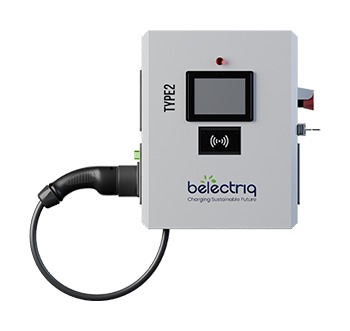
Made-in-India Type 2 charger offered at 3.3 and 7.4 kW on single-phase, and 11 and 22 kW on three-phase, with a dual-output option on most ratings. Drivers start by RFID, QR code or app, and Class 1 energy metering supports billing in shared parking.

  • Single or dual output
  • Class 1 energy meter
Power
3.3, 7.4, 11 or 22 kW
Supply
1-phase (3.3, 7.4 kW) or 3-phase
Connector
Type 2 (IEC 62196)
Protocol
OCPP 1.6J
Protection rating
IP55, IK08
Certification
ARAI, CE, IS 17017
Enquire Specs as published by Belectriq
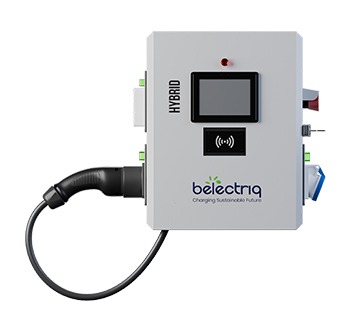
Belectriq AC Hybrid Charger AC EV charger 14 kW
Belectriq

AC Hybrid Charger

Three outputs in one unit: a 32 A Type 2 gun for cars plus two 16 A industrial sockets for electric two- and three-wheelers, so a single charger serves every vehicle in a society or workplace. Runs on a three-phase supply with OCPP 1.6J and a 4.3 inch display.

  • Cars, 2W and 3W
  • Charges 3 vehicles at once
Power
14 kW total
Supply
3-phase
Connector
1 Type 2 + 2 x 16 A sockets
Protocol
OCPP 1.6J
Protection rating
IP55, IK08
Certification
CE, IS 17017, AIS 138
Enquire Specs as published by Belectriq
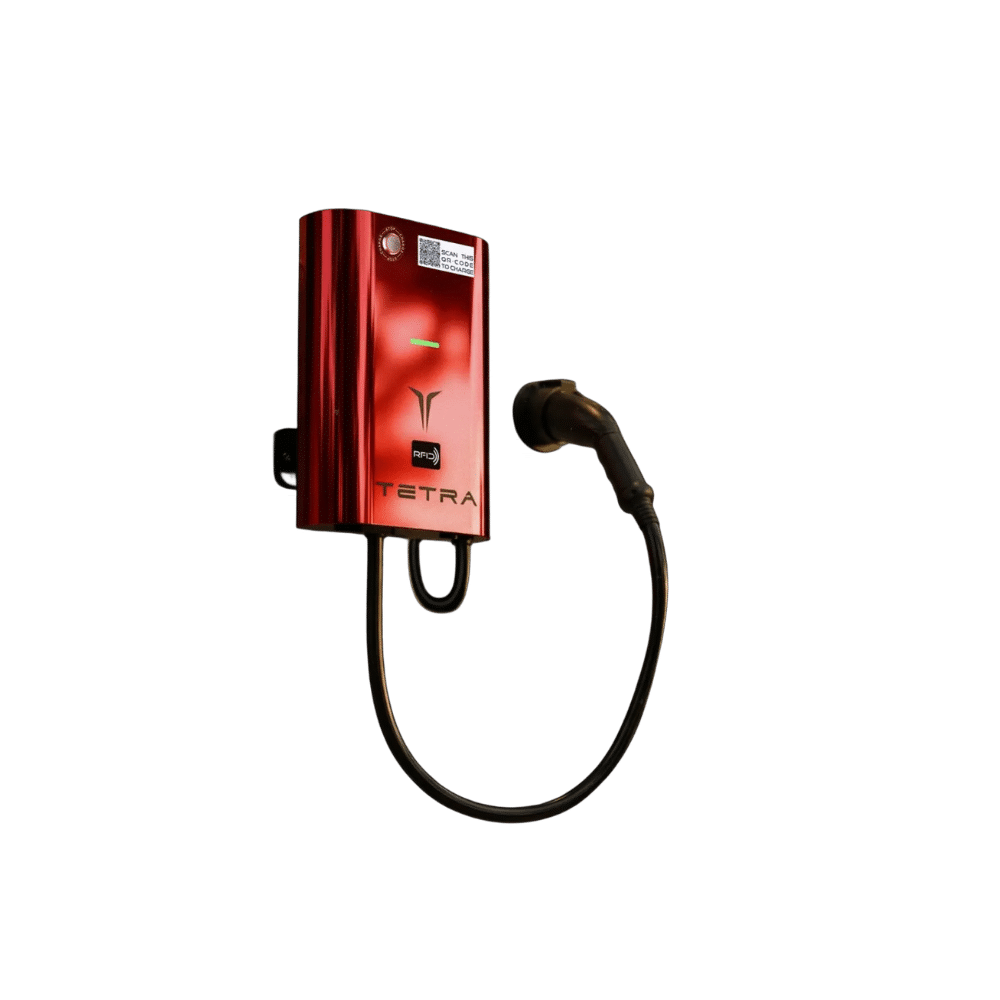
Tetra Motors Tetra AC 7.4 kW AC EV charger 7.4 kW
Tetra Motors

Tetra AC 7.4 kW

7.4 kW AC charger from Tetra Motors, the Bengaluru power-electronics company behind the Tetra DC fast-charger range. Tetra has not yet published full specifications for this model; enquire and the seller will share the datasheet.

  • Datasheet on request
Power
7.4 kW
Supply
Not published
Connector
Not published
Protocol
Not published
Protection rating
Not published
Certification
Not published
Enquire Specs as published by Tetra Motors
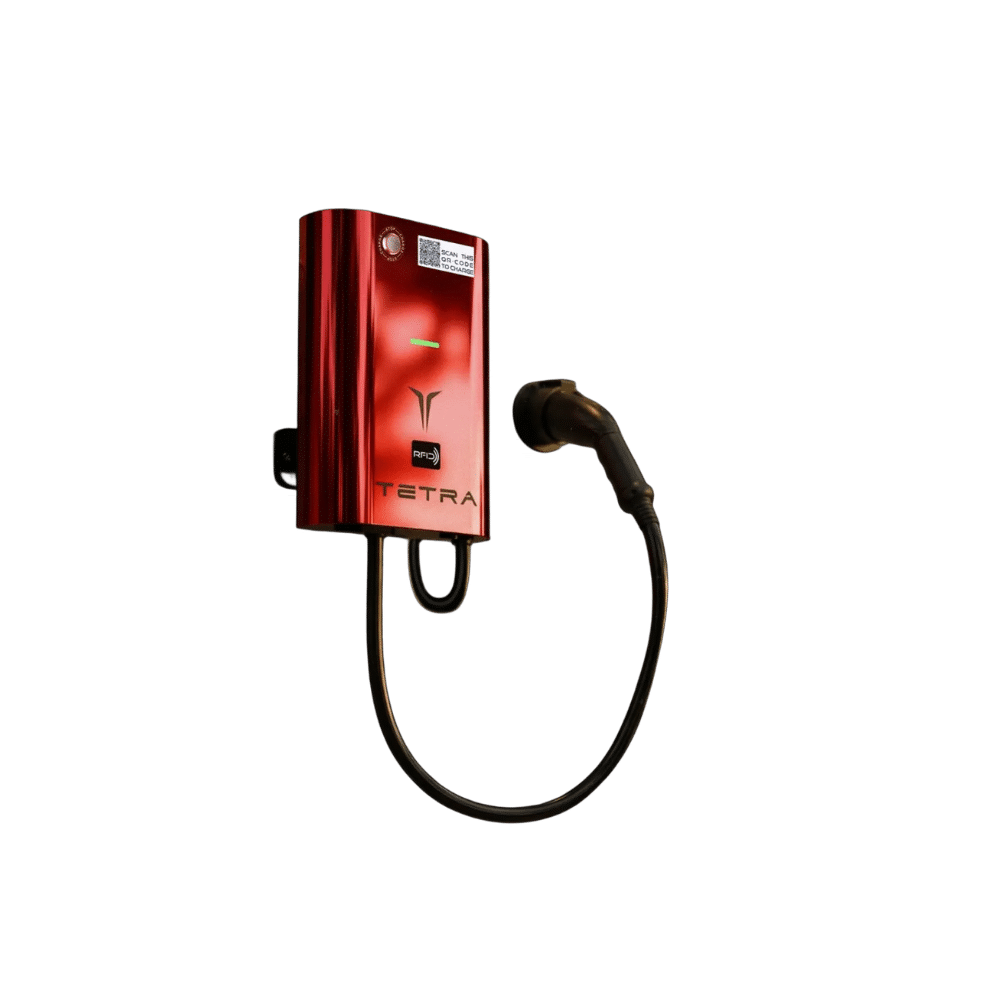
Tetra Motors Tetra AC 11 kW AC EV charger 11 kW
Tetra Motors

Tetra AC 11 kW

11 kW AC charger from Tetra Motors, the Bengaluru power-electronics company behind the Tetra DC fast-charger range. Tetra has not yet published full specifications for this model; enquire and the seller will share the datasheet.

  • Datasheet on request
Power
11 kW
Supply
Not published
Connector
Not published
Protocol
Not published
Protection rating
Not published
Certification
Not published
Enquire Specs as published by Tetra Motors
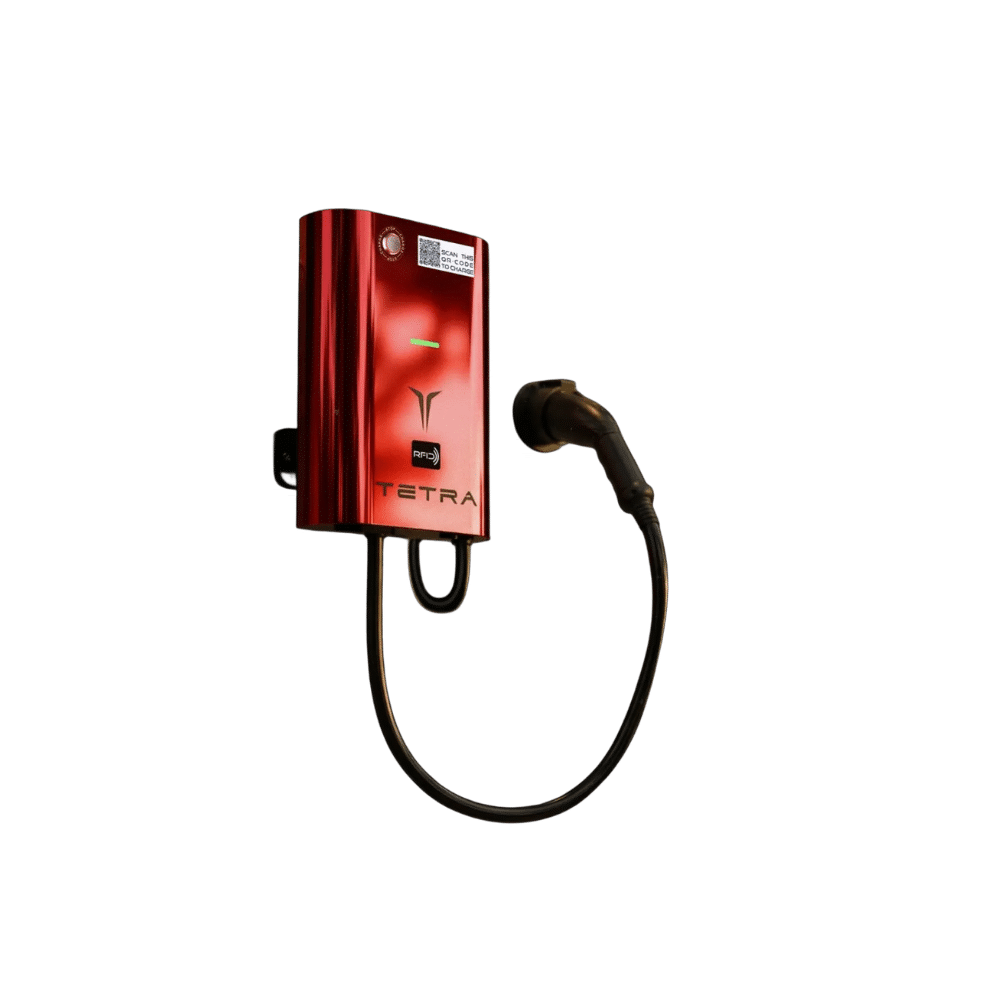
Tetra Motors Tetra AC 22 kW AC EV charger 22 kW
Tetra Motors

Tetra AC 22 kW

22 kW AC charger from Tetra Motors, the Bengaluru power-electronics company behind the Tetra DC fast-charger range. Tetra has not yet published full specifications for this model; enquire and the seller will share the datasheet.

  • Datasheet on request
Power
22 kW
Supply
Not published
Connector
Not published
Protocol
Not published
Protection rating
Not published
Certification
Not published
Enquire Specs as published by Tetra Motors

Get a quote for an AC charger

Pick a brand and product, then share a few details. That brand's seller will call you with pricing, installation details and timelines.

  • Free, with no obligation to buy
  • No payment on this website
  • Your details go only to the brand you choose
Which brand?

Thanks, your enquiry is in

The seller will call you shortly.

Where AC chargers work best

Typical power ratings by site. The right choice depends on how long vehicles stay and the power connection available.

Homes and villas

Typical: 3.3 to 7.4 kW

Plug in overnight and start every day full. Most homes need only a single-phase connection.

Housing societies

Typical: 7.4 to 22 kW

Shared chargers with RFID or app access and energy metering, so each resident pays for what they use.

Offices and tech parks

Typical: 7.4 to 22 kW

Employees charge through the working day, which supports company sustainability goals.

Hotels and resorts

Typical: 7.4 to 22 kW

Guests charge overnight or during a meal, and a charger helps travellers choose your property.

Malls and retail parking

Typical: 11 to 22 kW

Visitors top up while they shop, and paid sessions add a small revenue stream.

Two- and three-wheeler fleets

Typical: 3.3 to 14 kW

Delivery and e-rickshaw fleets charge many small vehicles at once from socket and hybrid chargers.

Questions buyers ask

What is the difference between an AC and a DC charger?

An AC charger supplies alternating current and the car's onboard charger converts it, which limits the speed. A DC charger converts the power itself and feeds the battery directly, so it is much faster but costs far more and needs a bigger power connection. AC suits places where vehicles park for hours.

Which AC charger should I buy for my home?

For most cars a 7.4 kW single-phase charger is the practical choice, because many cars sold in India accept about 7.2 to 7.4 kW on AC. Check your home's sanctioned load first. Choose 11 kW only if your car's onboard charger supports it and you have a three-phase connection.

Will a 22 kW charger charge my car faster than a 7.4 kW one?

Only if your car's onboard charger accepts more than 7.4 kW. A car with a 7.2 kW onboard charger charges at about the same speed on both. A 22 kW charger is still useful in shared parking, where different cars use it.

Can a housing society install shared AC chargers?

Yes. Choose chargers with RFID or app access and an energy meter so each resident is billed for their own use. Get approval from the society and check the building's available load before installation.

Can I buy a charger directly on this website?

No. My EV Charger does not sell chargers. Send an enquiry and verified sellers will contact you with quotes, installation details and timelines.

Need faster charging?

For highways, fuel stations and fleets, compare DC fast chargers from 60 kW to 240 kW.

See DC fast chargers

India's EV Charging Infrastructure is a Decade-Long Opportunity

My EV Charger - The Intelligence Layer Every Deployment Needs

India has millions of EVs on the road and fewer than 25,000 public charging points. The gap is massive — and growing. My EV Charger connects serious buyers with verified manufacturers and CPOs to accelerate every deployment across India.

You have been successfully Subscribed! Ops! Something went wrong, please try again.

India’s first multi-brand EV charging discovery and intelligence platform. Backed by All India EV — Educate · Aware · Promote.

business@myevcharger.in

© 2026 Right Reserved with All India EV

Support