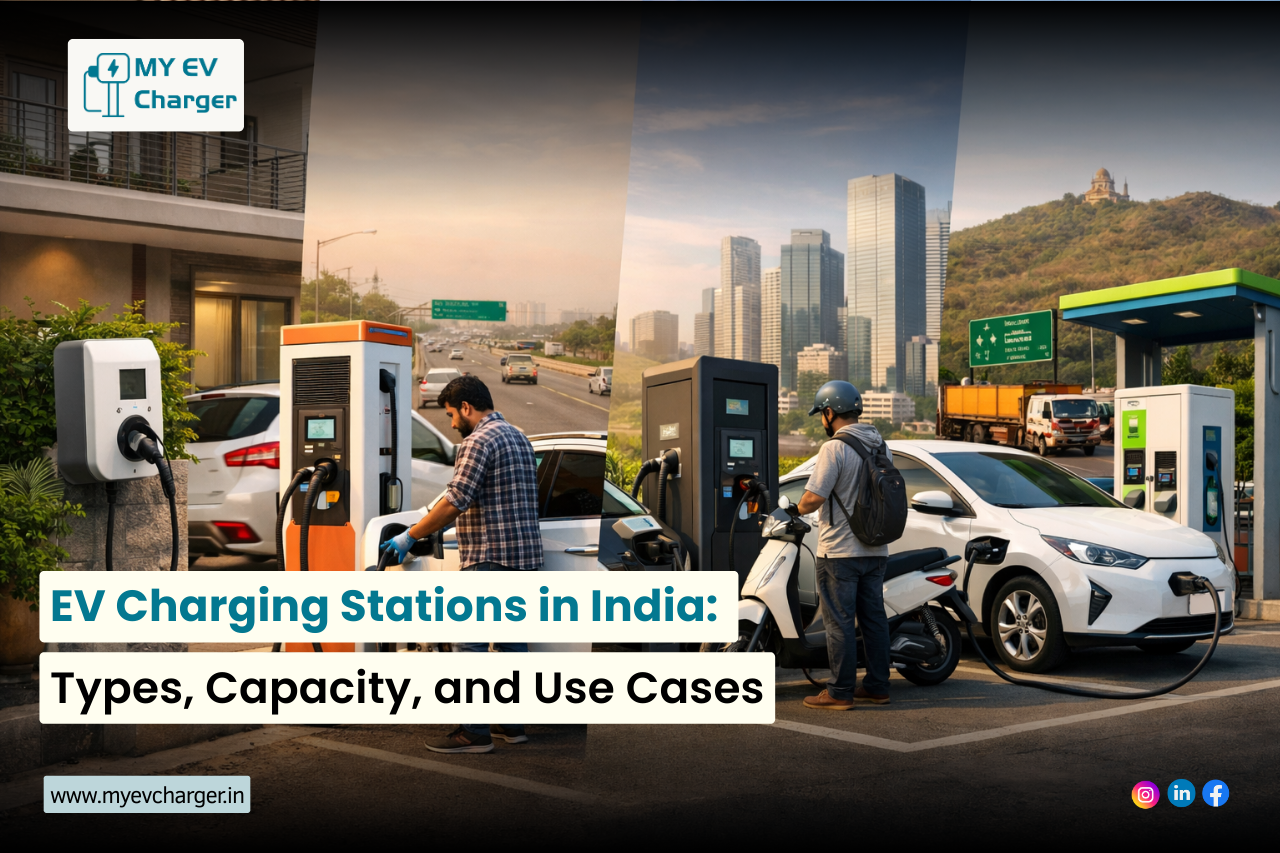
India’s electric vehicle revolution is accelerating rapidly, and at the heart of this transformation lies the critical infrastructure of EV charging stations. As more Indians switch to electric vehicles, understanding the landscape of electric vehicle charging stations becomes essential for both current EV owners and prospective buyers. These stations come in public and private setups, with deployments tailored to urban areas and highways, ensuring accessibility for daily commutes and long trips alike.
Understanding EV Charging Station Infrastructure in India
The network of vehicle charging stations in India has expanded significantly over the past few years, offering options like AC and DC chargers for various needs. From major metropolitan cities to national highways, charging infrastructure is becoming increasingly accessible. The government’s push toward electric mobility, combined with private sector investments, has created a diverse ecosystem of charging solutions tailored to different user needs and vehicle types.
Electric vehicle charging stations in India serve various purposes, from quick top-ups during long highway journeys to overnight charging at home. The type of charging station you choose depends on several factors including your vehicle’s battery capacity, your daily driving patterns, and the urgency of your charging needs.
Types of EV Charging Stations: AC vs DC Charging
India primarily uses AC and DC EV charging stations, each serving distinct purposes based on charging speed and use case requirements.
AC Charging Stations
AC (Alternating Current) charging stations represent the most common type of electric vehicle charging station found in residential areas and workplaces. These chargers deliver alternating current at 3-22 kW, suitable for overnight or extended parking scenarios. AC chargers, such as Type 2 connectors, deliver power to your vehicle’s onboard charger, which then converts AC to DC for battery storage.
Key Characteristics of AC Charging:
- Power output typically ranges from 3.3 kW to 22 kW
- Charging time varies from 4 to 8 hours for a full charge
- Type 2 connectors are the standard in India
- Lower installation and operational costs
- Ideal for overnight or extended parking situations
- Commonly used in homes, offices, and parking facilities
AC charging stations are perfect for scenarios where your vehicle will be parked for extended periods. Many residential complexes and office buildings in cities like Bangalore, Mumbai, and Delhi now feature AC chargers, making it convenient for EV owners to charge while they work or sleep.
DC Fast Charging Stations
DC (Direct Current) fast charging stations deliver high-power direct current directly to the vehicle’s battery, bypassing the onboard charger. DC fast chargers, including CCS (Combined Charging System) and CHAdeMO standards, provide direct current up to 350 kW for quicker charging sessions, often taking just 30-60 minutes to reach 80% battery capacity.
Key Characteristics of DC Charging:
- Power output ranges from 30 kW to 350 kW
- Can charge most EVs to 80% in 30 to 60 minutes
- CCS and CHAdeMO connector standards widely adopted
- Significantly higher installation costs
- Requires specialized electrical infrastructure
- Best suited for commercial applications and highway corridors
DC fast charging stations are game-changers for long-distance travel. Major highway corridors connecting cities like Mumbai-Pune, Delhi-Jaipur, and Chennai-Bangalore increasingly feature these high-capacity chargers, making interstate EV travel more practical than ever before.
Charger Capacities and Performance Levels
Capacities vary by type and location, with strategic placement ensuring optimal charging experiences for different scenarios.
Low to Medium-Capacity Charging (3.3 kW – 22 kW)
Urban AC stations typically range from 7.4-22 kW, ideal for homes, offices, and malls where vehicles stay parked longer. This capacity range works perfectly for daily commuters who can leave their vehicles plugged in for extended periods.
Ideal Use Cases:
- Overnight home charging
- Workplace charging during office hours
- Shopping mall and commercial complex parking
- Residential society parking
- Long-duration parking scenarios
The lower power draw makes it easier to integrate with existing electrical systems without major infrastructure upgrades, making these stations cost-effective for private installations.
High-Capacity Fast Charging (30 kW – 350 kW)
Highway DC stations offer 30-150 kW or more, enabling fast recharges for intercity travel at rest stops and toll plazas. These high-power chargers minimize vehicle downtime and address range anxiety for long-distance travelers.
Ideal Use Cases:
- Highway travel stops and rest areas
- Toll plaza quick charging zones
- Commercial fleet rapid turnaround
- Urban fast-charging hubs
- Emergency top-up situations
High-capacity DC fast chargers are essential for long-distance travel and commercial applications where vehicle downtime must be minimized. Taxi and ride-sharing services particularly benefit from these rapid charging solutions that can deliver significant range in under an hour.
Public vs Private Charging Infrastructure
Public Charging Stations
Public electric vehicle charging stations appear in malls, metro stations, highways, and petrol pumps, featuring app-based payments and smart monitoring for broad access. These stations are accessible to all EV owners and are typically operated by companies like Tata Power, Reliance BP, Ather Energy, and other charging network providers.
Advantages of Public Charging:
- Accessible to anyone with compatible payment methods
- Strategic locations along popular routes and destinations
- App-based payment systems and real-time availability tracking
- Smart monitoring features for optimal charging management
- No installation or maintenance responsibilities for users
- Availability of both AC and DC fast charging options
- Growing network coverage in urban and semi-urban areas
Public charging stations often charge per-unit rates or session-based fees. Mobile applications from various charging network providers help users locate nearby stations, check real-time availability, reserve charging slots, and make seamless digital payments.
Private Charging Stations
Private stations suit homes, offices, and apartments, focusing on cost-effective AC setups for personal or fleet use without public turnover demands. These electric vehicle charging stations include home chargers and dedicated workplace installations, offering the convenience of charging on your own schedule.
Advantages of Private Charging:
- Charge overnight with lower residential electricity rates
- No waiting in queues or uncertainty about availability
- Complete control over charging schedule and timing
- Long-term cost savings for regular users
- Enhanced convenience and security
- Customizable installation based on specific needs
- Dedicated access without sharing infrastructure
Most EV manufacturers provide home charging solutions as part of their vehicle packages. A typical home installation with a 7.4 kW AC charger can fully charge most electric cars overnight, ensuring you start each day with a full battery and minimal charging costs.
Deployment Strategies: Highway vs Urban Infrastructure
Highway Charging Stations
Highway setups prioritize DC fast chargers at high-traffic corridors to minimize downtime for long-distance drivers. The deployment of charging stations along India’s extensive highway network addresses one of the biggest concerns for EV adoption: range anxiety during intercity travel.
Highway Charging Characteristics:
- Predominantly DC fast chargers (50 kW and above)
- Strategic placement every 50-100 kilometers on major routes
- High-capacity stations ranging from 30-150 kW or more
- Amenities like rest areas, cafeterias, and washrooms
- Multiple charging points to handle peak traffic volumes
- Backup power systems for enhanced reliability
- Focus on rapid turnaround times
Major national highways like NH-1, NH-8, and NH-44 now feature well-planned charging corridors at rest stops and toll plazas. These vehicle charging stations enable cross-country travel, with charging stops that align naturally with meal breaks or rest stops during long journeys, making the charging experience seamless.
Urban Charging Networks
Urban deployments emphasize convenience with mid-speed AC chargers in city parking and commercial hubs. Urban electric vehicle charging stations cater to city dwellers who may not have dedicated home charging facilities, as well as commercial fleet operators requiring accessible charging points.
Urban Charging Characteristics:
- Mix of AC chargers (7.4-22 kW) and moderate-speed DC chargers
- High density installations in commercial and residential areas
- Integration with parking facilities, shopping centers, and metro stations
- Support for both two-wheeler and four-wheeler charging
- Smart charging with app-based access and real-time monitoring
- Strategically located at places where people naturally spend time
Cities like Bangalore, Delhi, Hyderabad, and Pune have witnessed remarkable growth in urban charging infrastructure. You’ll find charging stations at metro stations, multiplexes, office parks, petrol pumps, and select residential societies, making EV ownership increasingly practical for city residents without private parking arrangements.
Connector Standards in India
Understanding connector types is crucial for EV charging station compatibility:
Type 2 (AC Charging): The most common standard for AC charging in India, Type 2 connectors support single-phase and three-phase charging up to 22 kW. Most modern EVs sold in India come equipped with Type 2 compatibility.
CCS (Combined Charging System): This DC fast charging standard combines AC and DC charging in one connector, supporting power outputs up to 350 kW. CCS is becoming the preferred standard for many EV manufacturers in India.
CHAdeMO: A DC fast charging protocol primarily used by Japanese manufacturers, CHAdeMO chargers are available at many public charging stations, typically offering 50-62.5 kW charging speeds.
Smart Features and Technology Integration
Modern electric vehicle charging stations in India incorporate smart technology for enhanced user experience:
- App-based monitoring: Real-time tracking of charging status, battery level, and estimated completion time
- Digital payments: Seamless payment integration through UPI, credit cards, and mobile wallets
- Station locators: GPS-enabled apps showing nearby charging stations with availability status
- Load balancing: Intelligent power distribution to optimize charging across multiple vehicles
- Renewable energy integration: Solar-powered charging stations for sustainable energy use
- Remote diagnostics: Automated monitoring and maintenance alerts for station operators
The Future of EV Charging Stations in India
India’s charging infrastructure continues to evolve rapidly with ambitious expansion plans. The government aims to install thousands of new charging stations under various initiatives like FAME (Faster Adoption and Manufacturing of Electric Vehicles), while private players are investing heavily in expanding their networks across tier-1 and tier-2 cities.
Innovations like battery swapping for two-wheelers, ultra-fast charging technology capable of delivering 200+ km range in 10 minutes, and solar-powered charging stations are reshaping the landscape. Vehicle-to-grid (V2G) technology, which allows EVs to feed power back to the grid during peak demand, represents the next frontier in charging infrastructure development.
The integration of renewable energy sources with charging stations is gaining momentum, with many new installations incorporating solar panels to reduce carbon footprint and operational costs. Additionally, collaborations between automobile manufacturers, energy companies, and technology providers are creating comprehensive charging ecosystems that prioritize user convenience and sustainability.
Conclusion
The network of EV charging stations in India has reached a critical mass that supports widespread electric vehicle adoption. Whether you’re charging at home with a cost-effective AC charger, stopping for a quick DC fast charge on the highway, or topping up while shopping in the city, India’s charging infrastructure now offers solutions for virtually every use case.
Understanding the different types of electric vehicle charging stations from AC chargers with Type 2 connectors to DC fast chargers using CCS and CHAdeMO standards along with their capacities and optimal deployment strategies, empowers you to make informed decisions about EV ownership. The strategic placement of public stations at malls, metro stations, highways, and petrol pumps, combined with the growing availability of private charging solutions, ensures that range anxiety is becoming a thing of the past.
As urban deployments emphasize convenience with mid-speed chargers in city parking areas and highway setups prioritize rapid DC charging at high-traffic corridors, the charging experience continues to improve. With capacities ranging from 7.4-22 kW for urban stations to 30-150 kW or more for highway installations, India’s vehicle charging stations cater to diverse needs from overnight home charging to rapid intercity travel top-ups.
The future of transportation in India is electric, and the robust ecosystem of charging stations being built today featuring smart monitoring, app-based payments, and renewable energy integration will support this transformation for decades to come. Whether you’re already an EV owner or considering making the switch, rest assured that India’s expanding network of electric vehicle charging stations is ready to support your journey toward sustainable mobility.