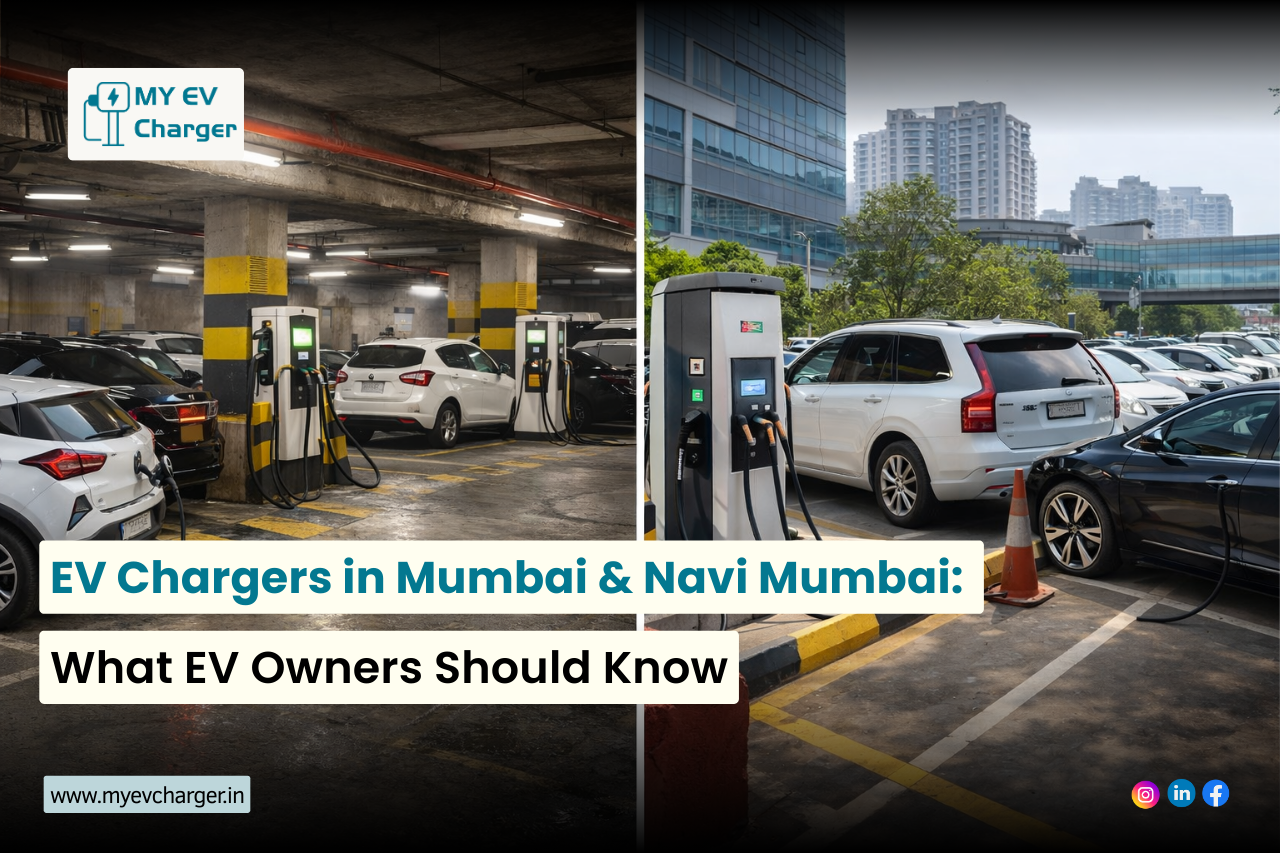
Mumbai and Navi Mumbai are rapidly expanding their EV charging infrastructure to support growing electric vehicle adoption amid intense urban density challenges. As India’s financial capital embraces sustainable mobility, understanding the charging landscape has become crucial for both current and prospective EV owners. This guide provides essential insights into ev charging stations in Mumbai, highlighting the unique space constraints and parking-linked solutions that define the region’s EV ecosystem.
Mumbai’s Charging Infrastructure: Current Landscape
Statiq operates 189 stations across Mumbai, representing one of the city’s largest charging networks. The infrastructure includes 83 AC chargers (primarily 11 kW pillar models) and 152 DC fast chargers (ranging up to 60 kW CCS compatibility), designed to serve popular models like the Tata Nexon EV, MG ZS EV, and Hyundai Ioniq 5.
Tata Power’s EZ Charge network spans key locations including Bandra, Andheri, and Worli, strategically positioned at:
- Shopping malls and commercial complexes
- Premium hotels like The LaLiT
- Public parking facilities with amenities including restrooms
- Business districts serving office-goers
Maharashtra’s ambitious target: The state government aims to establish 1,500 public charging stations by 2025, implementing a 3×3 km grid pattern across Mumbai. The BMC (Brihanmumbai Municipal Corporation) has committed to installing 300+ charging points, many featuring solar-powered setups to promote sustainable energy use.
Navi Mumbai’s Growing Network
ChargeZone and Tata Power dominate Navi Mumbai’s charging landscape, with prominent installations at:
- Turbhe MIDC (industrial zone integration)
- Vashi Sector 30A (residential-commercial mix)
- Vasai Unity Mall (retail charging hub)
- Lodha Amara (premium residential integration)
Many charging points are private or resident-only, reflecting the parking-linked model that has become essential in space-constrained environments. Jio-bp pulse has added fast charging units near highway corridors, specifically targeting inter-city travelers making Mumbai-Pune trips and beyond.
The Space Constraint Challenge: Mumbai’s Unique Approach
Why Parking-Linked Charging Matters
Mumbai’s acute parking scarcity makes standalone charging stations impractical. The city has pioneered parking-integrated charging solutions that maximize limited urban space:
New Housing Developments: Under Maharashtra’s EV policy mandates, new residential projects must incorporate charging infrastructure into their parking facilities.
Retrofitting Existing Societies: Older housing societies are receiving government incentives to retrofit charging points in existing parking structures, though this requires building society approvals and proper electrical infrastructure upgrades.
Public Hubs: Facilities like MMRDA BKC prioritize paid parking with integrated charging, allowing users to charge while their vehicles are already parked, eliminating the need for dedicated charging trips.
Practical Solutions for High-Rise Living
Residential towers are implementing innovative approaches:
- Multi-level charging points across various parking floors
- Smart load management systems to prevent electrical overload
- Time-sharing models allowing multiple vehicles to use the same charging point through scheduled slots
- Society-level subscriptions for better cost management
Essential Owner Tips for Mumbai & Navi Mumbai
Finding and Using Charging Stations
Use dedicated apps for real-time availability:
- Tata Charging Locator: Comprehensive Tata Power network mapping
- e-AMRIT map: Government platform showing all public stations
- PlugShare: Community-driven platform with user reviews
- Google Maps: Integrated charging station locations
Charging Costs and Speed
DC fast chargers are recommended for quick top-ups, especially during Mumbai-Pune highway runs. Expect costs around ₹11/kWh via Mahavitaran (Maharashtra State Electricity Distribution Company).
Key Charging Speeds:
- AC Chargers (11 kW): 4-6 hours for full charge, ideal for overnight parking
- DC Fast Chargers (60 kW): 30-45 minutes for 80% charge, perfect for quick stops
Compatibility and Booking
Always check compatibility before heading to a charging station. Most modern EVs support CCS (Combined Charging System), but verification through apps prevents wasted trips. Book charging slots during peak hours to avoid waiting times.
Comparing EV Infrastructure Across Major Indian Cities
EV Chargers in Delhi
EV chargers in Delhi feature dense networks with operators like Statiq establishing comprehensive coverage. The national capital benefits from aggressive government mandates requiring charging facilities in parking lots and commercial establishments, creating one of India’s most mature charging ecosystems.
EV Charging Stations in Bengaluru
EV chargers in Bengaluru concentrate around IT parks and tech corridors, with Tata Power dominating the expressway network. The city’s focus on corporate campus integration and highway corridor development makes it ideal for tech professionals transitioning to EVs.
EV Chargers in Hyderabad
EV chargers in Hyderabad emphasize solar-powered installations similar to BMC’s approach in Mumbai. The city has made significant strides in commercial fleet charging infrastructure, supporting both private vehicles and electric buses.
EV Chargers in Karnataka
EV chargers in Karnataka mirror the state’s broader grid development initiatives, extending beyond Bengaluru to tier-2 cities. The integrated state network facilitates inter-city travel throughout Karnataka.
All major cities face similar parking-linked challenges, making Mumbai’s model of integrating charging with existing parking infrastructure increasingly relevant nationwide.
Government Initiatives Driving Growth
Maharashtra’s comprehensive EV strategy includes:
- Target of 21,000 chargers across the state
- Subsidies for private charging station setup
- Streamlined permissions for residential and commercial installations
- Mandate for new construction to include EV charging provisions
- Solar integration in public charging facilities
Projected EV penetration: 15% by 2030, driving continued infrastructure expansion.
Planning for Cross-City Travel
Mumbai to Other Major Cities
For Delhi trips: Plan via integrated networks leveraging EV chargers in Delhi along the highway corridor, with major charging hubs every 80-100 km.
For Bengaluru trips: Utilize the extensive highway charging network connecting Maharashtra and Karnataka, with EV chargers in Karnataka ensuring coverage.
Mumbai-Pune corridor: The most developed route with Jio-bp pulse and Tata Power fast chargers ensuring seamless connectivity.
Addressing Common Concerns
Range Anxiety
With modern EVs offering 250-400 km range and expanding charging infrastructure, range anxiety is diminishing. The key is strategic planning using real-time apps and understanding your vehicle’s actual range under Mumbai’s traffic conditions.
Monsoon Charging Safety
Mumbai’s heavy monsoons require caution, but modern charging stations feature weather protection and safety features. Always check for water accumulation before connecting and avoid using damaged cables.
Society Approvals
Getting building society approval is easier now with:
- Standardized documentation requirements
- Growing awareness among society committees
- Government guidelines simplifying the process
- Demonstrated safety certifications from charging providers
The Road Ahead
Mumbai and Navi Mumbai are positioning themselves as leaders in space-optimized EV infrastructure. The parking-linked charging model addresses the twin cities’ unique constraints while supporting the projected growth to 15% EV penetration.
Key developments to watch:
- Expansion toward the 3×3 km grid target
- Integration of solar-powered charging stations
- Highway corridor development for seamless inter-city travel
- Apartment complex retrofitting programs
- Smart grid integration for load management
For current and prospective EV owners: Register with multiple charging networks, stay updated on new station openings via apps like Tata Charging Locator and e-AMRIT, and plan your charging strategy around existing parking routines. The infrastructure is rapidly maturing, making this an excellent time to transition to electric mobility in Mumbai and Navi Mumbai.
The comparison with ev chargers in Delhi, ev chargers in Bengaluru, ev chargers in Hyderabad, and ev chargers in Karnataka shows that while each city has unique approaches, the overall momentum toward electric mobility across India is undeniable. Mumbai’s innovative parking-linked model could serve as a blueprint for other densely populated urban centers worldwide.